Bis(2-Chloroethyl) Ether: A Comprehensive Commentary
Historical Development
Bis(2-Chloroethyl) ether turned up on the radar during a surge of chemical industry growth in the early to mid-1900s. Chemists scouting for solvents and intermediates came upon the compound through efforts driven by practical needs during pre- and post-war expansions. Manufacturers valued its unique ether and chlorinated structure. From the perspective of industrial chemists across the decades, seeing the evolution of chemical safety gives an appreciation for how unchecked adoption of new materials brought both technological advances and serious health questions. Older research, untempered by today’s oversight, often missed the effects these kinds of chemicals had on workers and communities, which shaped later regulatory standards.
Product Overview
What people refer to as Bis(2-Chloroethyl) ether commonly appears as a colorless, oily liquid with a sharp, chloroform-like odor. It’s not something you’d choose to handle without real purpose. It tends to serve as a specialty solvent or an intermediate in chemical syntheses, including in the manufacture of pesticides and plasticizers. Years of shifting industrial focus mean many companies have scaled back its use due to its health record, but it still finds a niche in well-controlled processes. Almost every chemist I’ve spoken to who’s worked with this ether remembers strict lab controls and clear training on spills, because regulatory agencies keep it on their watch lists.
Physical & Chemical Properties
Look at its chemical makeup — C4H8Cl2O — and you see a molecule with potential for both utility and risk. With a boiling point around 178°C and a density of about 1.18 grams per cubic centimeter, Bis(2-Chloroethyl) ether resists quick evaporation and easily mixes with many organic solvents. Its moderate solubility in water, partly from the ether oxygen, sets it apart from fully chlorinated analogs. Compared to other commodity chemicals, it’s pretty stable under normal storage, though exposure to moisture and bases can lead to decomposition or the release of corrosive byproducts. What matters to me, and anyone handling it, is how that combination of volatility and chemical reactivity can spell trouble if not managed carefully.
Technical Specifications & Labeling
Labels for Bis(2-Chloroethyl) ether need clarity due to its risk profile. The labeling typically shows its chemical name, formula, and a big warning about its toxic nature. The United Nations assigned it UN 2359 for transport safety. Technicians who’ve spent time in chemical warehouses know the difference between a safe bottle and a hazard is clear labeling and secure containment. Packing follows hazardous material regulations, with specifications calling for sturdy, leak-proof containers and secondary containment if stored in bulk. Labels also include hazard pictograms for acute and chronic hazards, given that inhalation or skin contact can cause significant health effects.
Preparation Method
This ether doesn’t come from anything resembling a green chemistry route. Industrial-scale synthesis usually uses ethylene glycol and thionyl chloride or phosphorus oxychloride. Those of us familiar with these processes remember thick fumes and the need for acid-resistant gear. Each preparation step gives off unwanted byproducts and wastes that demand careful scrubbing and disposal. In research settings, students learn early that vented fume hoods and glassware rated for strong acids make the process safer, but every exposure risk remains. Over the years, pressure from regulatory agencies led companies to upgrade scrubbers, monitor emissions, and look for process alternatives whenever possible.
Chemical Reactions & Modifications
With two chloroethyl groups hooked onto one ether oxygen, this compound proves reactive in nucleophilic substitution reactions — a classic in organic chemistry labs. It reacts readily with bases, amines, and other nucleophiles, making it a useful building block for more complex chlorinated compounds. The ether group stands up to a wider range of conditions than simple chlorides, yet under acidic or basic hydrolysis, the molecule can break down into hydrochloric acid and other hazardous fragments. Chemists trying to tweak its structure for applications like pesticide synthesis have learned where its weaknesses also pose risks to worker safety. It doesn’t forgive sloppy technique.
Synonyms & Product Names
Anyone searching for technical documents or safety sheets runs into a long list of synonyms. Common names include β,β’-Dichlorodiethyl ether, Di(2-chloroethyl) ether, Ethylene chlorohydrin ether, and ethylene glycol dichloride ether. Catalogs in different countries call it by alternate trade names, but the chemical structure tells the story. People working internationally need to check that local language synonyms match safety requirements since a mix-up with similar-sounding compounds has led to serious incidents in the past.
Safety & Operational Standards
People in the lab or on the plant floor know Bis(2-Chloroethyl) ether as a chemical that demands respect. Direct contact causes skin burns, eye injury, and respiratory distress. Occupational Safety and Health Administration (OSHA) and international agencies like the European Chemicals Agency (ECHA) classify it as hazardous, imposing workplace exposure limits well below 1 ppm. From experience, protective clothing, gloves, and full-face respirators are not optional with this substance. Extraction hoods and spill kits sit close by, and facilities run frequent drills for chemical leaks. Transport rules call for registration, manifest tracking, and emergency action plans because environmental releases threaten surrounding communities.
Application Area
Industrial uses centered on Bis(2-Chloroethyl) ether’s ability to act as a chemical bridge, linking molecular building blocks in the synthesis of pesticides, dyes, and plastic additives. During the 20th century, agricultural and defense sectors adopted it for large-scale processes. Today, the list of common uses has shrunk, mostly because safer or less persistent alternatives exist. Still, specialty chemical producers rely on it for a narrow slice of applications where its reactivity can’t yet be matched. Many plant operators I’ve spoken to say it’s kept on-site in small, secure quantities, only unlocked by workers trained in chemical hygiene and waste handling.
Research & Development
In research circles, focus shifted over the past three decades from making more Bis(2-Chloroethyl) ether to finding ways to cut its risks or engineer substitutes. Academic papers look at catalyst development, greener synthesis, and means to recycle waste streams. Green chemistry advocates keep pushing for processes using less hazardous raw materials, seeking to break away from chlorinated feedstocks altogether. Funding agencies want studies on remediation, investigating microbes and chemical treatments that break down the ether in contaminated soils or water. Looking back, it’s clear chemists today feel more pressure to consider health and ecological impacts than prior generations did.
Toxicity Research
Toxicology studies show Bis(2-Chloroethyl) ether can damage the liver, kidneys, and respiratory system after prolonged exposure. It earned a spot on multiple regulatory “concern” lists because animal studies revealed links to cancer and developmental problems. OSHA, NIOSH, and the World Health Organization offer guidance on handling and exposure, with recommendations for regular air sampling and medical surveillance for anyone in regular contact with the chemical. Anyone familiar with industrial hygiene knows stories of older workers who struggled with health issues long before the dangers reached mainstream attention. Current research continues to assess long-term, low-level exposure, pushing workplaces to pivot toward substitution with less toxic chemicals wherever possible.
Future Prospects
Regulatory pressure and massive investments in green chemistry call the future of Bis(2-Chloroethyl) ether into question. More manufacturers look to drop or tightly restrict it in product development, but for chemists tackling hard-to-solve synthesis problems, the compound remains hard to replace. Research is ongoing into biocatalysts and engineered processes using renewable feedstocks and milder conditions. In places where older industrial infrastructure remains, retrofitting plants to handle new chemistries lags behind, so the story isn’t one of immediate disappearance. Communities around former and active production sites demand cleanup and full disclosure, and their voices influence both lawmakers and managers. Some see a time when specialty use of these old chlorinated ethers vanishes. From a technical and ethical view, pushing toward safer alternatives while fully managing legacy risks isn’t just a choice — it’s a necessity grounded in health, science, and public trust.
Where It Shows Up
Bis(2-Chloroethyl) ether catches the eye because of its industrial use, not because most people have run into it at home. Factories have relied on it for years as a specialized solvent and as an intermediate. I still remember walking through industrial sites, where workers spoke about it as “BCEE”—a reminder this is a chemical with roots deep in manufacturing processes. Paper mills, for example, use it in small quantities for specialty applications, particularly as a processing aid and in some extraction work.
Why Industries Choose It
BCEE can break down tough resins and waxes. Engineers like its ability to cut into polymers where other chemicals fall short. Some folks in the plastics world add BCEE in chemical reactions to put together or break apart certain types of molecules, helping create flexible or toughened plastics. People in the pesticide business have also used it as a building block to make other compounds, because the structure lets them add chlorine atoms where needed for stronger, more targeted products.
Health and Environmental Concerns
On the factory floor, nobody takes BCEE lightly. Research links exposure to irritation of the eyes, lungs, and skin. It can be absorbed if spilled, causing more trouble beneath the surface. Once the public realized that, strong safety gear became standard—the kind with gloves, goggles, and powerful ventilation. If someone lets BCEE end up in water, it can stick around longer than many chemicals. Some studies spot its persistence in soil, raising red flags for environmental scientists. Countries have drawn lines around its use, forcing manufacturers to either minimize exposure or shift to other, safer raw materials.
Regulating Its Use
Government agencies have watched BCEE closely for decades. The Environmental Protection Agency in the U.S. lists it as a hazardous air pollutant. Workplaces must follow limits set by the Occupational Safety and Health Administration. I’ve seen safety officers closely check for leaks and review waste handling logs—anything less means serious trouble, both for health and in the form of hefty fines. Other countries place similar rules. Without enforcement, companies risk environmental damage and sick workers.
Searching for Safer Alternatives
Scientific teams continue searching for safer chemicals that can do the job BCEE does. I’ve seen university scientists partner with industrial chemists, digging up plant-based solvents and reworking older recipes. Responsible manufacturers now keep databases of every chemical in use, ranking them by health risk and environmental persistence. Labs worldwide have picked up the challenge—after all, nobody wants yesterday’s mistakes in tomorrow’s products.
What Local Communities Deserve
People living near industrial plants want straight answers. If a factory uses BCEE, the community should know how the company stores, handles, and disposes of it. Transparency gives workers and neighbors peace of mind. Training for emergency responders matters just as much—if a drum leaks or a pipe bursts, crews need to know precisely what they’re facing. Public agencies should keep closer tabs on pollution reports, pushing factories to switch away from chemicals like BCEE every chance they get.
Everyday Exposure Goes Further Than Expected
Chemicals with long, tongue-twisting names often fade into the background for most people. Bis(2-Chloroethyl) Ether, though, deserves some real attention. It shows up in industrial work—producing dyes, plastics, and other chemicals. Over the years, I've watched how its presence can sneak up on workers and, sometimes, spill over to neighbors and families.
Clear and Present Dangers
Breathing fumes or getting this compound on skin can cause more than mild discomfort. At low levels, irritation comes quickly: burning eyes, a scratchy throat, and sometimes, cracked skin. Long-term exposure, especially through breathing, reaches much deeper. Science has linked it to liver and kidney damage in workers exposed over months or years.
It doesn’t stop at just short-term misery. There’s research showing possible connections between exposure and cancer. The U.S. Environmental Protection Agency puts this ether on its list as a probable human carcinogen, based on data from animal studies. In these tests, long exposure caused various types of tumors. More studies on humans would help, but a “probable” rating from EPA already puts most governments and employers on high alert.
Risks Don’t Only Threaten Workers
I’ve met families living near old factories who shared stories about odd smells, frequent coughs, and even pets getting sick. Sometimes, small leaks or improper disposal lets liquids seep into groundwater. Contaminated water can end up in homes, schools, and even crops. This isn’t fearmongering. Documented cases exist—in states like New Jersey and Michigan—of chemical spills causing trouble for entire communities.
EPA’s Toxic Release Inventory tracks many industrial chemicals, but it still relies on reporting from companies. Communities who spoke up and demanded health studies often found regulators slow to act, especially before the full range of dangers became clear in the last few decades.
Practical Steps Make a Difference
Protecting health is less about scaring people and more about finding sensible, workable routines. Proper ventilation, sturdy gloves, and full-face respirators offer real defense for those handling Bis(2-Chloroethyl) Ether daily. I’ve worked with health and safety teams who check for leaks, train staff in spill response, and enforce tough safety codes. These measures work. Accidents drop and the health of workers looks better in annual checkups.
For neighborhoods near large plants, clear communication usually goes further than legal paperwork. Posting air monitoring results and offering water testing helps rebuild trust lost by earlier mistakes. Legislators must commit to regular inspections, transparent reporting, and swift cleanup orders when things go wrong. Those living nearby deserve to know what travels in the air and water, not months later, but today.
No Room for Complacency
People can’t afford to ignore old chemicals buried decades ago or skip routine testing because regulations seem tough already. Every community deserves the facts and a fair shot at healthy living. Bis(2-Chloroethyl) Ether’s record makes that clear: health vigilance, up-to-date testing, and honest risk communication always matter.
Understanding the Risks
Working around chemicals forces you to think about health and safety in a different way. Bis(2-Chloroethyl) ether, for instance, brings real hazards to the table. It's a volatile and toxic liquid, often used in chemical manufacturing, and it doesn’t play well with skin, lungs, or eyes. Short-term exposure can burn, irritate, and cause lasting damage. Breathing in the vapors over time has even been linked to cancer in scientific studies. Bleach and strong acids react dangerously with this compound, creating nasty gases. Nobody wants to bring those risks into a workplace or home, so how it gets handled matters every single day.
Storage Practices That Matter
The lessons I learned working in a busy chemical lab line up with most health and safety guidance out there. Treat Bis(2-Chloroethyl) ether with respect. Keep it in tightly sealed containers, away from direct sunlight and heat. Ordinary shelves never seem secure enough for something this toxic—metal safety cabinets built for flammable and reactive chemicals make more sense. Don’t stack containers on top of each other, since accidental leaks might go unnoticed for hours. I always check labels and seals before placing anything into storage. Clean labeling, right down to the chemical’s name and hazard warnings, keeps everyone on the same page.
Isolation from food and common workspaces trims the risk of contamination. This chemical deserves its own dedicated spot, away from anything that might trigger a reaction. In my experience, relying on a general storeroom leaves too much to chance. Proper ventilation in the storage area helps contain the vapors, and regular checks for leaks or corrosion can spot problems before they escalate.
Protecting the People Involved
Personal protective equipment stands between people and Bis(2-Chloroethyl) ether’s toxic effects. Safety goggles, chemical-resistant gloves, and lab coats work for small amounts, but any chance of a splash or spill calls for a face shield and an apron rated for harsh chemicals. I’ve always found that people skip protection when gear fits poorly or makes it hard to do the job—so I encourage a fit check with every new shipment. Respirators go a long way in poorly ventilated rooms and during cleanups, especially where vapor exposure runs high.
No one should handle this stuff without proper training. I remember sitting through safety drills that felt tedious at the time, but when a leak alarm went off or a bottle toppled from a shelf, the training paid off. Quick access to eyewash stations and emergency showers makes the difference in those moments when something goes wrong. Spill kits stocked with absorbent pads and neutralizers, placed right near the storage area, let people act fast and keep accidents from spreading.
Proactive Steps Go Further
I’ve noticed that open conversation about risks changes behavior more than any rulebook. Sharing facts—like the EPA classifying this compound as a probable human carcinogen—sticks with people much longer than warnings about fines. A culture that supports listening to concerns, regular refresher training, and honest reporting of near-misses makes everyone safer.
Responsibility doesn’t end at personal safety. Disposal needs careful planning. Pouring leftover chemicals into the sink isn’t just illegal—it puts the entire community at risk. Teaming up with certified hazardous waste disposal services closes the loop and keeps the broader environment safe.
Building a Safe Working Environment
Bis(2-Chloroethyl) ether serves a purpose in industry, but safe handling isn’t just a box to check. It calls for sustained focus, the right gear, honest communication, and reliable infrastructure. Every accident I’ve witnessed involved a breakdown in one of those elements. Building a safe system protects livelihoods, health, and the community as a whole.
Looking Beyond the Big Chemical Name
Long chemical names tend to scare people off, but Bis(2-chloroethyl) ether makes more sense once you strip away the technical talk. It’s a chemical used in industries that deal with solvents, resins, and certain pesticides. Regular folks rarely hear about it unless a spill or some controversy bubbles up nearby. Yet, its impact reaches further than you might guess.
The Reality: Harmful to Nature and People
Bis(2-chloroethyl) ether doesn't stay put. It leaks out during production, use, and disposal, seeping into water, soil, and air. In air, it breaks down slowly, giving it lots of time to drift and spread. If runoff or improper disposal sends it into rivers or groundwater, that’s where real trouble starts. Fish, plants, and other life forms absorb it, often suffering damaged growth or, worse, an early end. I grew up near industrial parks, saw what a single mistake in handling toxic chemicals could do—a brown patch in the creek, a sudden stink, fewer frogs come springtime.
Humans aren’t immune. Inhaling or touching this ether brings health risks: sore throats, headaches, liver and kidney problems. U.S. EPA classifies it as a probable human carcinogen, so it ranks high among substances you want nowhere near your drinking water. Over time, even tiny exposures can add up for workers or people living near disposal sites. The illness link makes it hard for families and workers to trust the promises that everything’s “under control.”
Facts Back Up the Worry
Tests show Bis(2-chloroethyl) ether clings stubbornly to the environment. It doesn’t break down fast, so one spill can linger long after clean-up crews pack up. Wildlife in affected rivers shows higher rates of illness and lower birth rates. A CDC report from the 2000s flagged strong associations between this chemical and cancers in test animals. Not exactly the type of legacy you want to hand down to future generations.
The environmental cost isn’t just abstract. Cleanup runs into the millions and doesn’t always succeed. Sites contaminated decades ago still register unsafe for residents and businesses, cutting down on community growth and opportunity. These problems pile up, especially in less wealthy neighborhoods that sit closer to older industrial sites.
Facing the Problem: Better Choices Exist
Some industries keep using Bis(2-chloroethyl) ether out of habit or lack of awareness about less dangerous alternatives. The real solution means pushing companies to phase out legacy chemicals and switch to safer compounds. Stricter oversight and lively public reporting keep the pressure on. I’ve seen local advocacy groups use hotlines and social media to get officials moving—especially after high-profile leaks.
Policy changes help, but real progress happens when workers speak up and businesses realize the PR and cost risks are too high to ignore. Clean tech grants, training programs for handling chemicals, and community monitoring all play a role. Quick access to real-time pollution data lets residents and watchdogs respond before small problems snowball.
I’d rather see investments in green chemistry than pay for hospital bills or water filters. Simple choices about which chemicals we allow in our hometowns shape the world our kids grow up in, whether or not we ever hear their names on the news.
Facing a Hidden Health Threat
Working with Bis(2-Chloroethyl) Ether doesn’t feel much different from handling any other volatile chemical until the facts come out. Studies connect this compound with threats to the liver, kidneys, and even the possibility of cancer with repeated exposure. The dangers often come in quietly, whether through skin, lungs, or even that cup of coffee left next to the bench. No lab coat or pair of glasses from the bottom of the drawer stands up to this kind of challenge.
Choosing the Right Barrier
Gloves always come first to mind. Thin latex gloves snap on easily, but that thin shield falls apart fast here. I have seen nitrile or PVC gloves hold up better against harsh organics and solvents. The CDC and OSHA both recommend glove materials that do not break down on contact. It never hurts to check the manufacturer’s resistance charts, since this chemical finds its way through a lot of materials over enough time. Double-gloving—switching them out at the first sign of stress cracks—cuts down on skin contact almost entirely.
Breathing Safely
The vapor can sneak through the air without warning. General ventilation doesn’t keep up, so a full-on chemical fume hood stands as the frontline defense. For anyone who must step in and out or work without that luxury, a fitted respirator with organic vapor cartridges actually makes a difference. During my time in older labs, some folks skipped this step after a hasty air quality check. A headache or mild cough gets brushed off, but that discomfort is the body saying something went wrong.
Protecting Your Eyes and Skin
Safety goggles—shatterproof, chemical splash rated—cover the eyes better than regular prescription lenses. Face shields give extra coverage for splashes, especially when working with higher concentrations. The lab coat should reach past the knee. It should have snug cuffs to minimize accidental exposure. Disposable Tyvek sleeves or full coveralls give extra insurance for spill-prone jobs. Regular street clothes underneath add little protection here; chemicals don’t care about cotton or polyester when they spill or splash.
Footwear and Lab Habits Matter
Enclosed, chemical-resistant shoes offer another shield for the feet. I used to think any closed-toe shoe could handle a spill, but chemicals easily seep into fabric and leather. Rubber or coated footwear makes cleanup simpler and cuts down on exposure. Simple habits, like swapping soiled gloves before opening doors or jotting down notes, matter just as much as the gear. I keep handwashing stations close, not only as a backup but as part of every routine.
Why Protocols and Training Stay Important
Personal protective equipment gets the attention, but real safety always comes from understanding the risks and following strict protocols. From regular fit tests for respirators to properly storing and disposing of contaminated gear, each step counts. Sharing stories of near misses or quick saves with coworkers keeps the awareness up. Accidents don’t make the news, but people remember the panic when a bottle drops or a fume hood fails. Real care comes from knowing it could happen to anyone and acting like it matters every single day.
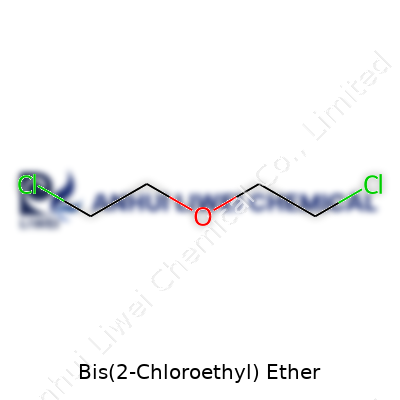
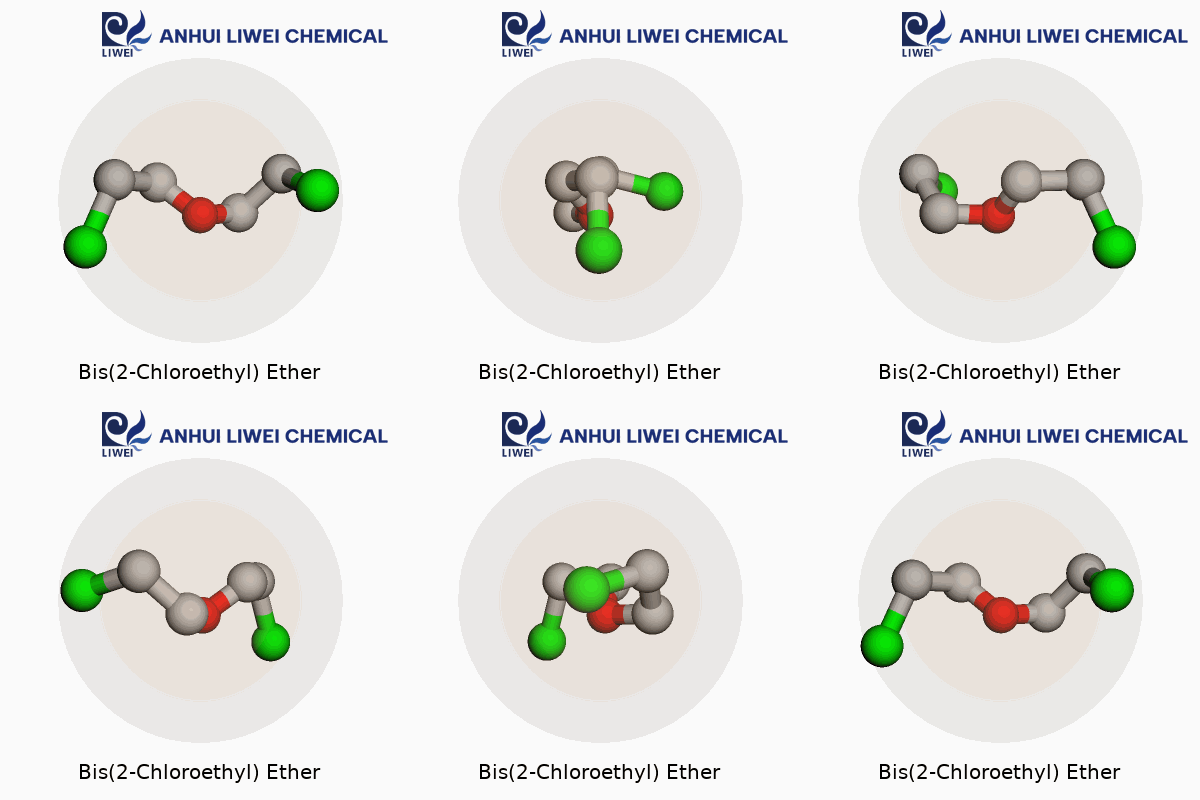
| Names | |
| Preferred IUPAC name | 1-chloro-2-(2-chloroethoxy)ethane |
| Pronunciation | /bɪs ˌtuː ˌklɔːrəʊˈiːθaɪl ˈiːθə/ |
| Identifiers | |
| CAS Number | 111-44-4 |
| 3D model (JSmol) | ClCCOCCCl |
| Beilstein Reference | 1, 335 |
| ChEBI | CHEBI:27745 |
| ChEMBL | CHEMBL1741145 |
| ChemSpider | 7829 |
| DrugBank | DB16406 |
| ECHA InfoCard | 100.003.517 |
| EC Number | 203-870-1 |
| Gmelin Reference | 1739055 |
| KEGG | C14711 |
| MeSH | D001605 |
| PubChem CID | 8115 |
| RTECS number | KN0700000 |
| UNII | 6Q2L2K3A7S |
| UN number | 1916 |
| Properties | |
| Chemical formula | C4H8Cl2O |
| Molar mass | 143.01 g/mol |
| Appearance | Colorless to Almost colorless clear liquid |
| Odor | Pungent, chloroform-like odor |
| Density | 1.22 g/cm³ |
| Solubility in water | 1.02 g/100 mL (20°C) |
| log P | 1.12 |
| Vapor pressure | 0.7 mmHg at 20 °C |
| Acidity (pKa) | -4.5 |
| Magnetic susceptibility (χ) | -0.586X10^-6 cm3/g |
| Refractive index (nD) | 1.442 |
| Viscosity | 2.06 mPa·s at 20 °C |
| Dipole moment | 2.53 D |
| Thermochemistry | |
| Std molar entropy (S⦵298) | 362.3 J/(mol·K) |
| Std enthalpy of formation (ΔfH⦵298) | -345.8 kJ/mol |
| Std enthalpy of combustion (ΔcH⦵298) | -2256.1 kJ/mol |
| Pharmacology | |
| ATC code | L01AA05 |
| Hazards | |
| GHS labelling | GHS pictograms: GHS02, GHS06, GHS08, GHS09; Signal word: Danger; Hazard statements: H226, H301, H310, H330, H351, H373, H411; Precautionary statements: P210, P260, P273, P280, P301+P310, P302+P350, P304+P340, P305+P351+P338, P310, P361, P405, P501. |
| Pictograms | GHS02, GHS05, GHS06, GHS08 |
| Signal word | Danger |
| Precautionary statements | P201, P202, P260, P262, P264, P270, P271, P273, P280, P284, P301+P310, P302+P350, P304+P340, P305+P351+P338, P308+P313, P310, P312, P314, P320, P321, P322, P330, P332+P313, P337+P313, P361, P362, P363, P391, P403+P233, P405, P501 |
| Flash point | 55 °C |
| Autoignition temperature | 369 °C |
| Explosive limits | 1.7% - 5.8% (v/v) |
| Lethal dose or concentration | LD50 Oral, Rat: 56 mg/kg; LC50 Inhalation, Rat: 320 mg/m³ (4 h); LD50 Dermal, Rabbit: 90 mg/kg |
| LD50 (median dose) | 56 mg/kg (rat, oral) |
| NIOSH | KN0875000 |
| PEL (Permissible) | 15 ppm (90 mg/m³) TWA [skin] |
| REL (Recommended) | 5 ppm (30 mg/m³) TWA; 10 ppm (60 mg/m³) STEL [skin] |
| IDLH (Immediate danger) | 100 ppm |
| Related compounds | |
| Related compounds |
2-Chloroethyl methyl ether
2-Chloroethyl ethyl ether Bis(2-chloroethyl) sulfide Bis(2-chloroethyl)amine |


