Benzyl Bromide: From Early Synthesis To Emerging Uses
Historical Development
Benzyl bromide didn't just pop up out of thin air; it emerged out of the growing chemical industry’s curiosity in the 19th century. Early chemists wrestled with methods to alkylate aromatic compounds, and benzyl bromide quickly proved to be more reactive than its chloride cousin. Laboratories working with Grignard and Friedel-Crafts reactions have pointed to benzyl bromide as a key player in early organic synthesis, and its usefulness took root as researchers dug deeper into the chemistry of the benzyl group. This compound served as a gateway chemical, helping shape the broader field of alkyl halide chemistry and offering countless pathways to new molecules, especially at a time when scientists were hungry for tools to build medicines, dyes, and flavoring agents.
Product Overview
Benzyl bromide stands as a strong alkylating agent. Its reputation spreads far and wide, particularly in fine chemical manufacturing and drug discovery. Each bottle usually contains a clear, colorless to pale yellow liquid with a sharp, acrid odor that will wake up anybody in the lab, even through a mask. This isn’t a substance you’ll find on an ordinary shelf; its uses stretch from the pharmaceutical bench to the plastics industry, and its reactivity puts it on the list for anyone synthesizing complex molecules.
Physical & Chemical Properties
The compound appears as a heavy, oily liquid, with a density pushing past 1.4 g/cm³. Its boiling point sits just north of 200°C, so it doesn’t evaporate at room temperature, though it fumes in air, giving off a pungent smell that no one forgets after the first whiff. It dissolves in many organic solvents but shuns water, forming a separate layer. Benzyl bromide behaves with a kind of chemical bravado; its bromide atom makes it eager to take part in nucleophilic substitution, and it reacts swiftly with bases or nucleophiles, forming a wide array of products.
Technical Specifications & Labeling
Every container needs careful labeling. You’ll usually see the chemical formula C7H7Br, along with hazard warnings. From the dew point of the storage area to the proper closure system, handling procedures demand detail—impermeable gloves, eye protection, and chemical fume hoods are standard. Technical sheets lay out critical specs: purity lingers above 98%, moisture must stay below 0.2%, and color specs use APHA or Hazen units for transparency in industrial quality checks. Manufacturers emphasize the need to track every gram, owing to its listed status as a controlled precursor in some regions.
Preparation Method
Lab benches and industrial reactors both churn out benzyl bromide through relatively straightforward means. The most common route starts from toluene—an accessible and inexpensive aromatic hydrocarbon—reacted with bromine in the presence of a catalyst like ferric bromide or ultraviolet light, which helps initiate the substitution reaction at the benzylic position. This approach remains practical and scalable. Controls on temperature and rate of addition make the difference between clean product and side reactions, which can complicate purification and waste disposal.
Chemical Reactions & Modifications
Benzyl bromide dons its reactive badge and participates in a wide range of nucleophilic substitution reactions. The benzyl group slips onto oxygen, nitrogen, and sulfur atoms, producing ethers, amines, and thioethers that show up in pharmaceuticals, fragrances, and lab reagents. Protection strategies in organic chemistry often involve benzylation using benzyl bromide, since the benzyl group’s easy installation and removal provide a reliable way to shield sensitive parts of a molecule. Alkylation reactions dominate the field, though side reactions—elimination and hydrolysis—keep chemists on their toes. In research, this compound finds itself at the crossroads of invention, forming building blocks for drugs, new materials, and catalysts.
Synonyms & Product Names
The marketplace and the research world call benzyl bromide by several names: α-bromotoluene, phenylmethyl bromide, and benzenemethanebromide, to name a few. Suppliers catalog it under various codes and tradenames. These aliases reflect the compound’s widespread recognition across regions and industries, though every label warns the same—handle with care.
Safety & Operational Standards
This liquid takes its toll on eyes, skin, and lungs. Direct exposure results in severe irritation, and even low concentrations in the air generate discomfort. Proper lab culture means working only in fume hoods, storing behind secure barriers, and never opening outside of a well-ventilated room. Regulatory frameworks flag benzyl bromide as hazardous, and transport rules demand sealed, leak-proof containers. Emergency eyewash stations and showers remain necessary backups. Environmental agencies also monitor its disposal; it can pose risks to aquatic life, so waste streams require neutralization or incineration. Global safety standards press for rigorous training and incident reporting, and companies focus investment on safe handling protocols because reputational harm and employee injuries cost more than compliance.
Application Area
Researchers and manufacturers put benzyl bromide to work in some of chemistry’s busiest fields. Pharmaceutical chemists use it to build molecules with anticonvulsant, antihistamine, and anesthetic effects. In the world of flavors and fragrances, benzyl bromide helps craft aromatic ethers, delivering backbone notes in essential oils and synthetic scents. Laboratory staff turn to it for introducing protecting groups onto alcohols or amines. Outside the lab, you’ll find it acting as an intermediate for dyes, agrochemicals, and photographic chemicals. Even specialty plastics industry folks have recipes that make use of its unique reactivity, improving heat resistance or plasticizer quality.
Research & Development
Work with benzyl bromide keeps evolving as markets seek greener approaches. Researchers chase new catalysts and flow chemistry setups, reducing hazardous waste and bumping up yields without resorting to excessive solvents. Smart chemists push for alternatives to bromine—generating benzyl bromide in situ from safer precursors or recovering and recycling bromine to lower environmental impact. There’s ongoing exploration into catalytic benzylic functionalization, aiming to outpace the competition in pharmaceutical development by cutting down on production steps and material costs. Academic papers focus on the selective use of this compound in constructing complex molecules, seeking routes that minimize toxicity and optimize ROI for novel drug candidates.
Toxicity Research
Toxicologists study benzyl bromide closely. Animal studies and cellular tests show that exposure causes acute respiratory and eye irritations, and repeated contact can lead to more severe effects—potential organ damage and mutagenic risks. Regulators in Europe, the US, and Asia keep its occupational exposure limits tight, and workplaces rely on regular monitoring. There’s no avoiding its volatility; even seasoned professionals report memorable incidents with stray vapors. Waste handlers and safety officers emphasize neutralization with sodium thiosulfate or other reducing agents, ensuring no untreated material finds its way into water systems. Advances in molecular modeling help predict and minimize unintended biological interactions, informing safer lab and industrial routines.
Future Prospects
The way forward for benzyl bromide reflects the direction of the whole specialty chemicals sector—innovation leads, but not at the expense of safety or the planet. Engineers want reactors that enable continuous processing, thumbs up from environmental regulators, and robust risk-mitigation built into every step. Smart manufacturing integrates real-time monitoring and remote shutoff features. As pharmaceutical pipelines demand more complex building blocks, demand for benzyl bromide’s unique reactivity will likely grow. Researchers scan for greener routes—photocatalysis and electrochemistry top the list of buzzwords in R&D departments. The compound’s long track record gives it staying power, but the future hinges on cleaner, safer, and more cost-effective production, and companies that invest in these areas will shape the next chapter in benzyl bromide’s story.
An Old Chemical with Persistent Importance
Benzyl bromide doesn’t turn many heads outside lab benches, yet its story runs through university chemistry classrooms, giant pharma plants, and specialty research labs. Years ago, some classmates and I used it in an organic synthesis. The smell hit us first — sharp, irritating, aggressive. This is not a workplace favorite, but the punch it delivers in chemical reactions keeps scientists coming back for it. That memorable odor? It hits hard for a reason; benzyl bromide is more than just another bottle on a shelf.
Where It Shows Up
Pharmaceuticals draw a straight line to benzyl bromide. The compound helps build molecules for active pharmaceuticals, making the “raw” materials that eventually fight disease. Chemists reach for benzyl bromide when putting together antihistamines or certain psychiatric drugs. They value its reactivity. It helps bolt together molecular sections quickly, like a specialized glue. No chemist wants to handle this for fun — just purpose.
Beyond the medicine cabinet, benzyl bromide finds work in dyes and fragrances. Those bright colors in specialty materials often rely on chemistry few outside the field ever see. It helps tweak scents and pigments, feeding industries from soaps to printing inks. These products start in flasks and reactors, not fields or flowerbeds. That's real chemical industry in action, and benzyl bromide works in the background.
In academic circles, it’s a classic teaching tool for “alkylation” — that is, adding carbon chains to molecules. Professors hand it out in practical chemistry labs, where students watch firsthand how new structures build from relatively simple pieces. Those experiences matter more than rote facts; working with hazardous materials like benzyl bromide teaches respect for chemical safety.
The Safety Problem Everyone Faces
Danger walks hand-in-hand with benzyl bromide. Breathing this stuff or getting it on your skin brings big trouble. The liquid reacts fast with living tissue, burning eyes, nose, and lungs. In the workplace, regulations pop up everywhere: tight gloves, goggles, chemical hoods.
Science can’t just wish away risks. In my own studies, anyone using benzyl bromide learned emergency procedures before ever opening the bottle. Chemical supplier Sigma-Aldrich classifies it as toxic and corrosive, requiring secure ventilation and strict handling documentation in both academic and industrial settings. Incidents with this reagent have pushed labs and factories to upgrade air control, protective equipment, and— most importantly— training.
Better Alternatives and the Role of Innovation
Industry has slowly shifted away from benzyl bromide in consumer goods because of those health problems. Its traces have been minimized in anything people touch or wear. Today, researchers look for greener, safer chemicals—“benign by design” is the phrase floating around green chemistry circles. The tools exist, but switching isn’t simple. Chemists often stick with benzyl bromide because alternatives fall short for some jobs. Progress crawls, but each substitution chips away at the total danger.
The real importance of benzyl bromide comes from its ability to enable useful chemical reactions— and from the responsibility to handle it safely. Teaching future chemists to understand the hazard reinforces good habits early, while continued investment in substitute pathways protects both workers and the world outside. Chemical tools matter, but the choices and care behind them matter more.
What Makes Benzyl Bromide Risky?
Benzyl bromide is no stranger to those who have spent time around a chemistry lab. It gets used to make other chemicals and appears in research settings. One thing stands out, though: this liquid packs a punch in terms of danger. It's got a biting, sharp smell and doesn’t do your eyes or lungs any favors.
Inhaling just a little bit can burn your nose and throat. If it lands on skin, things get worse quickly—redness, blisters, and lasting pain tend to follow. Droplets in the eyes create an emergency that calls for washing out the area for several minutes. Long-term exposure definitely isn’t wise. A couple of people I know have encountered it by accident, and just being in the same room as an open bottle for a few minutes had them coughing and their eyes watering.
Toxic Effects You Shouldn’t Ignore
Benzyl bromide isn’t just a nuisance. It also brings true health risks. According to safety data, this chemical can damage the respiratory tract. People who work around it have experienced headaches, dizziness, and chest tightness. In bigger doses or over time, it can cause serious harm to the lungs.
This compound also acts as an alkylating agent—meaning it can mess with DNA. While not every exposure leads to long-term disease, the risk of genetic damage seems real from animal studies. Some evidence points toward possible links with cancer, though the proof isn’t as strong as for some other industrial chemicals.
Spills are another trouble spot. On surfaces or the ground, benzyl bromide can travel as a vapor. Anyone nearby gets exposed unless proper exhaust systems run non-stop. Water sources and soil can get contaminated because this chemical doesn’t break down right away once released.
Facts Backing Up the Dangers
Agencies like the US Occupational Safety and Health Administration (OSHA) and the Centers for Disease Control (CDC) list benzyl bromide as hazardous. They’ve set guidelines for its handling—these aren’t suggestions, but hard requirements meant to keep people safe. Even seasoned chemists use full gloves, safety hoods, and lined containers to avoid direct contact.
Reports from workplace incidents are sobering. Back in the 1980s, two technicians handling a leaking drum without full protection both wound up in the hospital. This isn’t uncommon where shortcuts get taken or safety equipment isn’t up to date. Researchers who forget to double-check their fume hood soon learn just how quickly painful symptoms set in.
Pushing for Better Solutions
Nobody gets out of danger by pretending hazards aren’t real. That means companies and universities should prioritize strong ventilation, reliable emergency showers, and decent personal protective gear. Clear labeling reduces the odds of mistakes. In my lab work, a simple checklist taped to every workstation kept everyone mindful.
Training makes a huge difference. New lab members who watched short safety demonstrations handled benzyl bromide with more respect. Trusted sources like the National Institute for Occupational Safety and Health (NIOSH) and the International Chemical Safety Cards have a ton of good material for anyone who needs it.
Chemists are always hunting for safer substitutes, too. Where benzyl bromide isn’t essential, greener alternatives can push down accidents.
Benzyl bromide isn’t a household name, but anyone working with it faces real, immediate dangers. Smart precautions and staying aware of its risks save injuries and lives.
Understanding Benzyl Bromide
Benzyl bromide carries the formula C7H7Br. It shows up as a colorless to yellow liquid, but once you catch its harsh smell, you won't forget it. This isn’t some rare academic trivia. Benzyl bromide plays a real role in everyday chemistry labs and even shows up in discussions about safety rules for chemical handling.
Going Beyond the Formula
On paper, C7H7Br looks pretty straightforward: a benzene ring (C6H5) linked to a –CH2Br group. That structure means it's a kind of benzene, but with a little extra reactivity. Its uses make waves in organic synthesis. Chemists trust benzyl bromide to make all sorts of things from pharmaceuticals to specialty solvents. In class, teachers love to bring up this compound to show how basic building blocks can shape huge industries.
Living with Its Hazards
Every chemical comes with risks. Benzyl bromide doesn’t cut corners here. I remember the first time I smelled it in a college lab; even the tiniest whiff made my eyes water. It irritates mucous membranes, and just a small spill can send people running for fresh air. Safety regulations require strong ventilation and proper gloves. Poor handling leads to lasting problems—one improper fume hood, and you’ll hear about it from janitorial staff to administration.
Spotting Benzyl Bromide in Real Life
Some folks work all day with chemicals like this one. It pops up in the synthesis of dyes, perfumes, and even some types of plastics. Without a formula, ordering or discussing these substances would become a mess. The chemical structure tells everyone what they’re dealing with and builds trust between suppliers, workers, and regulators.
Safety First: Preventing Trouble
Facts matter most when they protect people. The U.S. Occupational Safety and Health Administration (OSHA) says exposure limits should stay well below levels that cause symptoms. Proper fume hoods, tight-fitting goggles, and gloves ranked for organic chemicals keep benzyl bromide out of eyes and lungs. Many labs keep emergency eyewash fountains close by because water works as the first step for accidental splashes.
Solutions for Safer Work
Safer chemistry involves smarter choices. Sometimes, labs swap in less volatile reagents or use smaller quantities. Automation helps too; robotic arms and sealed tubes keep humans safe from exposure. Training goes a long way, teaching people to respect warning labels and never ignore a chemical’s power. Simple rules—label your bottles, store chemicals away from heat, and triple-check the room’s ventilation before opening any container—save resources and lives.
Why Formula Knowledge Stays Critical
Chemical formulas serve as shorthand for trust, clarity, and shared understanding. C7H7Br means you know what’s inside the bottle and what to expect from it. Whether you’re explaining a reaction in front of a class or double-checking your orders at a warehouse, that formula stands as your guide.
Understanding the Risks
Benzyl bromide doesn’t get mentioned in everyday conversation for good reason. This clear, colorless to yellowish liquid carries with it a sharp odor and a reputation for being quite tough to deal with. Benzyl bromide has been around for a long time, especially in labs where a need for specific benzylic intermediates comes up. I’ve seen its power to burn right through gloves and make folks cough from across the room. The stuff can hurt skin, eyes, and lungs in a hurry. Some people might think they can treat it like simple lab solvent, but that’s where trouble starts.
Practical Storage Steps
Every chemist who has worked with benzyl bromide knows storage cannot be an afterthought. This chemical attacks most plastics and rubber just as easily as it does living tissue. Glass containers with tight-fitting Teflon-lined caps hold up best. Store bottles away from direct sunlight and heat sources, since high temperatures only make volatility worse. A dedicated, flame-resistant storage cabinet turns out to be a wise investment. Don’t lump it together with other chemicals—especially water, acids, or oxidizers. These mixtures risk dangerous reactions and potential fires.
Personal Experiences Shape Habits
Memories of a colleague’s careless spill stick with me. Even small amounts can trigger coughing fits and prickling skin. Respirators and chemical splash goggles became non-negotiable after that event. Washing with plenty of soap and running water cut the damage, but the lesson hit home: “routine handling” has no place with a reagent like benzyl bromide. Routine just invites lapses.
Ventilation and Environment
Vent hoods create more than comfort—they save health. Benzyl bromide vapor stings the air with every drop. Forgetting to work under a proper fume hood quickly teaches the meaning of “irritant.” Labs without powerful ventilation systems simply have no business using this chemical. Any worktable setup must factor in easy access to eyewash and safety showers. Spills, though rare with good training, call for fast and thorough cleanup. Absorbent pads, baking soda for neutralization, and plenty of water form the first line of defense.
Training and Mindset
Short safety briefings right before work with benzyl bromide help avoid complacency. Labels need to be in bold print and containers shouldn’t mix in with less hazardous bottles. Gloves made from nitrile or butyl rubber, along with lab coats and sleeves, keep hands safe. After handling, change gloves and wash up, even if no spill took place. Mistakes often start with small shortcuts, especially late in the day when tired minds look for easier ways out.
Mistakes Have Consequences
Reports of chemical burns from benzyl bromide reach journals more often than some might expect. Fact: underestimating its hazards leads to harm. Benzyl bromide doesn’t only irritate; it sensitizes, meaning even small exposures might turn into bigger health problems over time. It also belongs on the suspect list for some cancer risks, depending on long-term workplace contact.
Solutions and Best Practices
Safety gear, strict training, and secure storage all make working with benzyl bromide less dangerous. Group reviews of clean-up drills and emergency procedures prepare teams for real-world accidents. Stocking spill kits shows worry for staff health isn’t just policy—it’s practice. Labs and workplaces owe colleagues clear signage, up-to-date Safety Data Sheets, and no excuses on supervision. Storing keys for hazardous cabinets only with senior staff keeps curiosity at bay. Regular audits by experienced team members prevent safety slide.
Recognizing Benzyl Bromide’s Hazards
Benzyl bromide isn’t your everyday lab chemical. Anyone who’s opened a bottle knows about its harsh, biting smell. That odor signals danger: this compound causes burns on skin, stings the eyes—the risk reaches further to lungs and long-term health. That sharpness isn’t just unpleasant. Studies show exposure may lead to severe respiratory issues and skin blistering. I learned the hard way that even a drop on the glove means you need a new pair right away.
Ventilation Isn’t Optional
I always insist on working with benzyl bromide in a properly functioning fume hood. Not just a half-open window or a desk fan—those fumes need to be collected and expelled. The reason comes down to vapor pressure and toxicity. Researchers at multiple universities have reported accidental exposures that resulted in lab evacuations. Just a bit in the air causes coughing fits and severe eye irritation.
No Substitute for Good Personal Protective Gear
Ordinary lab coats and safety glasses don’t cut it. Splash goggles, face shields, and chemical-resistant gloves—nitrile at least 8 mil thick—keep hands and eyes free from exposure. I learned from a senior chemist to double up gloves for anything over a few milliliters. Cotton-lined nitrile gloves offer one layer of comfort and protection. Any splash, even small, can cause days of pain, or worse, permanent scarring.
Handling Spills and Accidents
Spills need immediate action. I keep calcium carbonate, sodium bicarbonate, or similar absorbent on hand because neutralizing agents make cleanup safer. After mopping up, all wipes and gloves head straight for a sealed hazardous waste bin. Safety showers and eyewash stations should be close. I’ve seen a new assistant panic, running blind after a splash to the face; that’s how I learned the shower’s location matters more than its sign.
Storage and Labeling Stop Problems Before They Start
Benzyl bromide shouldn’t share a shelf with acids, alkalis, or general store chemicals. Segregation in fireproof, well-ventilated cabinets, using clear, chemical-resistant labels in large print, keeps confusion at bay. Any damaged bottle or suspect label leads to disposal, not guessing games. I once saw someone reach for the wrong chemical—good labeling saved the day.
Running Reactions: Slow, Deliberate, Unrushed
Adding benzyl bromide dropwise, using syringes or addition funnels, reduces the chance of violent reactions. Exothermic mixtures need ice baths or cooling. Hurrying a reaction means risking a runaway or overexposure. I was taught to prepare for an emergency before even opening the bottle—spill kits open, waste containers set, glassware clamped tight.
Training Builds Safe Habits
Anyone working with this chemical should go through hands-on safety instruction. No one should start alone or without supervision. Incidents drop when teams share experiences and stick to checklists. Online training doesn’t stick the way practical demos do. Practice makes safety second nature—I’ve seen it save skin and sanity more than once.
A Culture of Safety Protects Everyone
Benzyl bromide’s dangers aren’t just a matter for the safety manual. Regular safety audits, easy access to MSDS sheets, and a culture that rewards speaking up about near-misses avoid later tragedy. The right mindset and good habits turn a hazardous material into a manageable tool, not a looming threat.
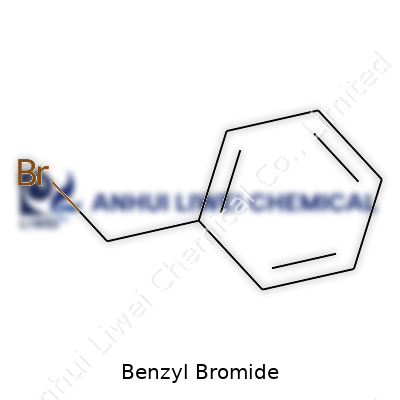
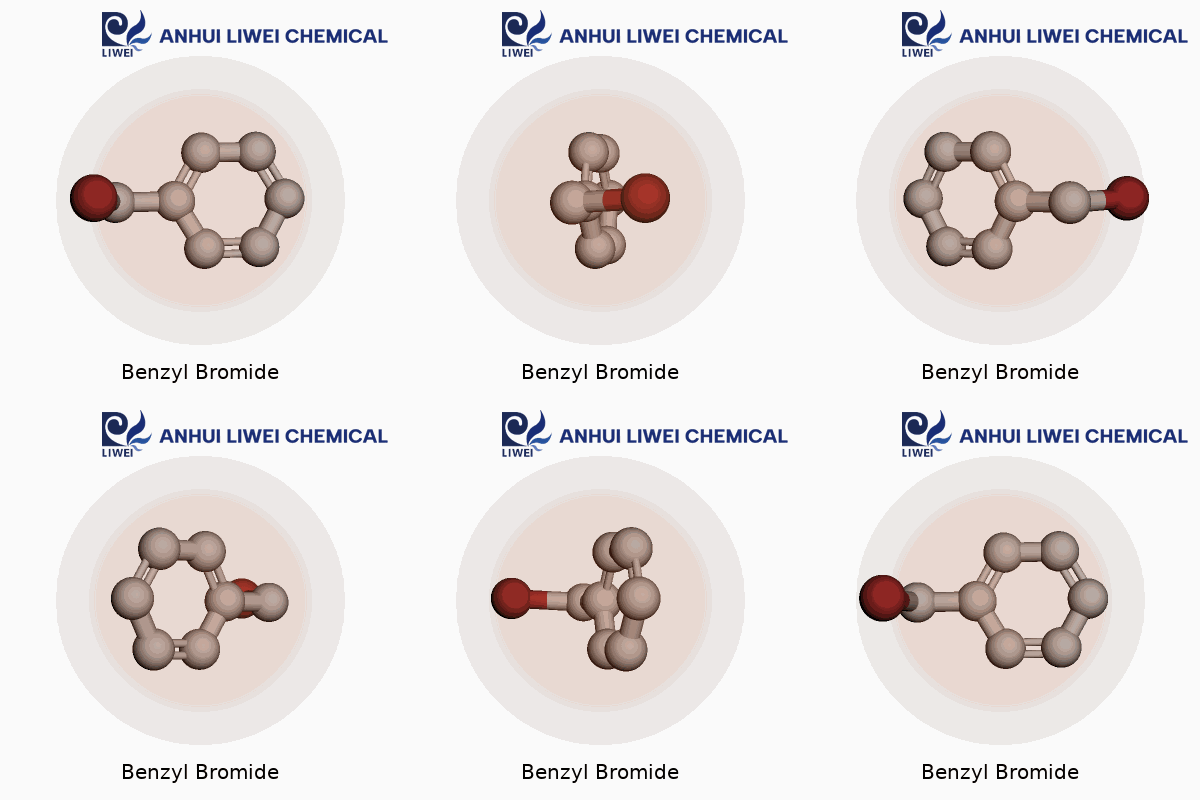
| Names | |
| Preferred IUPAC name | bromomethylbenzene |
| Other names |
α-Bromotoluene
Bromomethylbenzene (Bromomethyl)benzene Phenylmethyl bromide 1-(Bromomethyl)benzene |
| Pronunciation | /ˈbɛnzɪl ˈbroʊmaɪd/ |
| Identifiers | |
| CAS Number | 100-39-0 |
| 3D model (JSmol) | BrCc1ccccc1 |
| Beilstein Reference | 742304 |
| ChEBI | CHEBI:59861 |
| ChEMBL | CHEMBL23758 |
| ChemSpider | 138515 |
| EC Number | 202-847-3 |
| KEGG | C19168 |
| MeSH | Benzyl Bromide |
| PubChem CID | 7459 |
| RTECS number | XS7965000 |
| UNII | K4P6L5S1H8 |
| UN number | 1737 |
| Properties | |
| Chemical formula | C7H7Br |
| Molar mass | 171.037 |
| Appearance | colorless liquid |
| Odor | pungent |
| Density | 1.438 |
| Solubility in water | Insoluble in water |
| log P | 2.92 |
| Vapor pressure | 0.3 mmHg at 25 °C |
| Magnetic susceptibility (χ) | χ = -93.9 × 10^-6 cm^3 mol^-1 |
| Refractive index (nD) | 1.5680 |
| Viscosity | 1.5 mPa·s at 20°C |
| Dipole moment | 1.83 D |
| Thermochemistry | |
| Std molar entropy (S⦵298) | 266.0 J·mol⁻¹·K⁻¹ |
| Std enthalpy of formation (ΔfH⦵298) | -36.4 kJ/mol |
| Std enthalpy of combustion (ΔcH⦵298) | -3771 kJ/mol |
| Hazards | |
| Main hazards | Toxic if swallowed, toxic in contact with skin, toxic if inhaled, causes severe skin burns and eye damage. |
| Pictograms | GHS05, GHS07, GHS09 |
| Signal word | Danger |
| Hazard statements | H314 Causes severe skin burns and eye damage. H317 May cause an allergic skin reaction. H335 May cause respiratory irritation. |
| Precautionary statements | P260 P280 P301+P330+P331 P303+P361+P353 P304+P340+P310 P305+P351+P338 P310 P405 P501 |
| NFPA 704 (fire diamond) | 3-2-0 |
| Flash point | 79°C (174°F) |
| Autoignition temperature | 565°C |
| Lethal dose or concentration | LD50 (oral, rat) 300 mg/kg |
| LD50 (median dose) | 50 mg/kg |
| NIOSH | C 5 ppm (35 mg/m3) [skin] |
| PEL (Permissible) | 1 ppm (7 mg/m3) |
| REL (Recommended) | 0.1 ppm (0.7 mg/m3) [skin] |
| IDLH (Immediate danger) | 50 ppm |
| Related compounds | |
| Related compounds |
Benzyl chloride
Benzyl iodide Benzyl alcohol Bromobenzene Toluene alpha-Bromotoluene |


