1-Chloro-3-Methoxypropane: A Deep Dive into a Versatile Intermediate
Historical Development
Chemistry over the last century has grown up alongside major changes in technology and manufacturing. 1-Chloro-3-methoxypropane came about as chemists began looking for specialized intermediates to build new materials during the latter half of the 20th century. Early records point to its use in the synthesis of ethers and for grafting chemical handles onto polymers and bioactive compounds. Researchers in organic synthesis circles kept an eye on alkoxychlorides like 1-chloro-3-methoxypropane because of their potential to link molecular building blocks. Over time, the methods to make such compounds became both safer and more efficient, feeding industries like pharmaceuticals and materials science.
Product Overview
With a backbone that brings together both the reactivity of a chloro group and the solubility offered by a methoxy function, 1-chloro-3-methoxypropane finds itself at the intersection of many synthetic routes. Chemists use it as an alkylating agent, as well as a starting point for making surfactants, flavors, and even some specialty polymers. This intermediate doesn’t often reach consumers directly, but its fingerprints show up across a range of products where manufacturers need a reliable link between other chemical structures.
Physical & Chemical Properties
In the lab, 1-chloro-3-methoxypropane appears as a clear, colorless liquid with a moderately sweet odor, much like other simple ethers or chlorinated hydrocarbons. The compound offers a boiling point in the neighborhood of 118–120°C, placing it comfortably between the volatility of simple chlorides and heavier ethers. Its density sits near 1.02 g/cm³ at room temperature. The molecule resists hydrolysis a bit better than simple alkyl chlorides because of the methoxy group, though it reacts readily under both acidic and basic conditions. The logP value hovers around 1, so it strikes a balance between hydrophilicity and lipophilicity, supporting its usefulness as a synthetic intermediate where solubility matters.
Technical Specifications & Labeling
Chemical manufacturers specify purity for 1-chloro-3-methoxypropane typically at 98% or above, with limits set on water and residual starting materials like 3-chloro-1-propanol or dimethoxypropane. Standard packaging uses amber glass bottles under inert gas or polyethylene containers resistant to halides. Labeling mandates the UN number (UN 1993, for flammable liquids), hazard pictograms for skin and eye irritation, along with GHS hazard and precautionary statements—a big part of worker protection and safe logistics.
Preparation Method
Industrial-scale synthesis relies on reacting 3-chloro-1-propanol with methylating agents, such as dimethyl sulfate or methyl iodide, under base catalysis. Lab-scale procedures usually use sodium hydride or potassium carbonate with methyl iodide in aprotic solvents like DMF. Yields often exceed 85% with careful temperature control and by blocking side reactions with well-chosen solvents and purification schemes. Companies track batch records tightly for traceability, since leftover impurities from methylating agents could carry significant safety or environmental concerns.
Chemical Reactions & Modifications
The chloro group in 1-chloro-3-methoxypropane invites nucleophilic substitution, so chemists swap it out for amines, thiols, or hydroxide ions, opening doors to a diversity of functionalized propanes. In pharmaceutical research, the methoxy group offers a way to mask reactive hydroxy groups, allowing multi-step synthesis without unwanted byproducts. Under certain conditions, oxidation converts the methoxy end into an aldehyde or acid, letting researchers stepwise modify the backbone to create fine chemicals. Working in materials science, I’ve seen researchers use this compound to create crosslinked networks by introducing the chloro end onto polymer chains and using subsequent reactions to “tie up” the structure.
Synonyms & Product Names
Alternative names in lab catalogs include 3-methoxypropyl chloride, 1-chloro-3-methoxypropane, and β-chloro-n-propyl methyl ether. In production facilities, the compound can show up under less formal names like 3-chloropropyl methyl ether, so technical staff must stay alert to avoid mix-ups with similarly named propyl derivatives. CAS number 5704-59-2 provides a clear identifier across supply chains, which helps keep quality control records clean and prevents confusion during storage.
Safety & Operational Standards
The molecule brings moderate hazards. Skin and eye irritation top the list, matched by risks of inhalation exposure that can irritate airways or kick off headaches in poorly ventilated areas. Facilities use fume hoods and gloves rated for halogenated solvents, especially where larger volumes are involved. Emergency protocols involve spill control with activated carbon and safe disposal in line with halide waste streams. Safety data sheets all flag the need for environmental precautions, since chlorinated organics can persist or release toxic byproducts when incinerated improperly.
Application Area
Chemical plants and research labs keep 1-chloro-3-methoxypropane in steady rotation for assembly of surfactants, ethers, and active pharmaceutical intermediates. It crops up in flavor and fragrance synthesis, especially as a reagent for introducing smooth, low-volatility methylpropyl tails. Some researchers in crop protection chemistry use it to make specialized additives for agrochemicals, where both chlorine and ether chemistry add stability or tweak solubility. Materials scientists lean on the compound’s reactivity to build up molecular weights or chain ends for custom polymers with precise functional properties.
Research & Development
Academic labs see the versatility of 1-chloro-3-methoxypropane as a way to push boundaries in selective synthesis. Medicinal chemists chase efficient, high-yield routes to prodrugs or masked functional groups. In my own experience, the compound became a linchpin in exploring biologically relevant molecules, acting as a partner in alkylation reactions that built novel scaffolds for drug candidates. Interest grows fastest where R&D pivots around green chemistry, as newer methods aim to cut out toxic byproducts or use safer methylating agents.
Toxicity Research
Animal studies show that high doses of 1-chloro-3-methoxypropane can trigger irritation and central nervous system effects, mostly through inhalation or repeated skin exposure. Acute toxicity ranks on the lower to moderate side compared with other alkyl chlorides, but chronic exposure studies remain thin. Regulatory bodies flag this compound not because of extreme hazards, but due to the unknowns around environmental buildup and possible breakdown into more mobile, persistent chlorinated organic species. Research right now leans towards effect studies focused on metabolic pathways and persistence in aquatic environments.
Future Prospects
The outlook for 1-chloro-3-methoxypropane depends on how future regulations treat halogenated organics and how the industry addresses risk management. Opportunities to develop greener synthesis—from more benign methylating agents to fully recyclable solvents—stand out as a likely evolution. With demand for specialty chemicals rising in pharma and materials sectors, efficient, low-waste production matters more than ever. Researchers and producers who keep pace with both safety innovations and legislative changes will shape how this compound gets used and understood. The best potential lies in combining its classic reactivity with new thinking around environmental impact and process safety so it keeps playing a solid part in fine chemical development for years ahead.
Where 1-Chloro-3-Methoxypropane Fits In
1-Chloro-3-Methoxypropane stands out as a chemical building block in organic synthesis. Its structure, with a chlorinated chain linked to a methoxy group, makes it a favorite among chemists looking for selective reactions. Over the years, I’ve watched how often researchers turn to molecules like this one for their reliability and versatility, particularly in labs focused on drug discovery or fine chemical manufacturing.
Primary Use: Making Connections in Synthesis
The real draw of 1-Chloro-3-Methoxypropane shows up in its use as an alkylating agent. In simpler terms, it serves as a tool to link up parts of complex molecules. The chlorine atom acts as a leaving group, making the molecule ready to attach itself to more reactive nucleophiles, such as amines or alcohols. This approach streamlines the process of building ethers and amines, which often pop up in pharmaceuticals, agrochemicals, and dyes. Many chemical reactions depend on this kind of intermediate for speed and selectivity, reducing wasted time and cost. The importance of quick, selective reactions isn’t just a matter of efficiency; it helps limit the production of unwanted by-products that create headaches in downstream processing and disposal.
Why This Matters
Pharmaceutical labs rely on intermediates that give clean reactions and predictable results. Compounds like 1-Chloro-3-Methoxypropane save chemists from repeated synthesis steps, which stack up costs and increase the margin for error. Not every molecule offers this kind of reliability. I’ve seen projects stall because an earlier-stage building block didn’t perform as expected. Switching to a more responsive intermediate made all the difference, especially in time-sensitive research environments.
Risks and Responsible Handling
Like many organochlorine compounds, 1-Chloro-3-Methoxypropane demands proper handling because it presents certain health and environmental risks. Inhaling vapors or skin contact causes irritation, and some chlorinated compounds have persistent environmental footprints. Spills can mean extended cleanup and oversight if labs don’t have protocols in place. Over the years, I’ve watched safety standards evolve to match rising awareness. Fume hoods, gloves, and eye protection have become baseline requirements. Disposal procedures draw from local, national, and international laws to limit environmental impact. Groups like the Occupational Safety and Health Administration (OSHA) and the Environmental Protection Agency (EPA) publish clear guidelines, helping labs stay compliant and safe.
Better Options for a Greener Future
Calls for greener chemistry have pushed researchers to hunt for alternatives to chlorinated reagents. Substituting with less toxic alkylating agents, or developing biodegradable options, sits high on the priority list for some labs. The push for sustainability doesn’t rest only on regulatory pressure. Chemists often aim to cut waste and pollution as part of professional pride and responsibility. Sharing research on cleaner alternatives—and funding those projects—could spark real progress. In the meantime, 1-Chloro-3-Methoxypropane continues to fill a practical niche, but the push for greener chemistry promises a shift in the coming years.
Looking Closer at 1-Chloro-3-Methoxypropane
Organic chemistry operates like a massive puzzle, where each compound tells its own story through structure and properties. 1-Chloro-3-Methoxypropane, for example, has a molecular formula of C4H9ClO. That single formula packs in quite a bit, both for what it says about the molecule and for the role it plays in real-life settings.
How Understanding the Formula Helps
Anyone who’s worked in a chemistry lab or followed the progress of drug discovery knows the value of details. The formula C4H9ClO describes a chain of four carbon atoms, nine hydrogen atoms, one chlorine, and one oxygen. This arrangement allows chemists to predict how the molecule reacts. Chlorine brings a certain reactivity, making this compound useful in synthesis and industry.
Miss one atom in a formula, and you wind up with a completely different compound. That’s not just trivia. I remember working on a project in college where a single misplaced methyl group changed the intent of the whole experiment. Molecular formulas matter because careers and even industries rely on knowing the exact ingredient. Incorrect calculation or confusion here can waste significant resources.
Molecular Formulas and Trust in Science
Precision in chemistry builds trust. You’d never want a medication or a plastic to act unpredictably. Reliable molecular information lays the foundation for every new innovation in synthetic drugs, materials, and more. Every research article, data sheet, or patent employs these formulas as anchors for communication. Transparency and reliability bring confidence to investors, companies, and the end-user. If research doesn’t accurately reflect the correct formula, it quickly damages credibility, both for researchers and for the institutions supporting them.
Real-World Impact of Misunderstandings
Society depends on facts staying straight. 1-Chloro-3-Methoxypropane can find its way into countless reactions as a building block. If data on it isn't trustworthy, unnecessary safety hazards or costly mistakes could slip into manufacturing. The consequences of chemical misidentification don’t stop with a single failed reaction. In the chemical industry, errors can mean environmental spills, worker health risks, or large-scale recalls. That risk highlights the requirement for thorough knowledge, correct reporting, and robust verification.
Solutions Rooted in Experience
Solid chemistry education focuses on helping students read and write molecular formulas until it becomes second nature. My own confidence in recognizing and double-checking structures started in hands-on classes, not just textbooks. In the workplace, software tools now enhance precision, flagging inconsistencies between chemical names and their formulas. In proposal writing, peer review and mandatory cross-checks prevent mistakes from creeping into the research pipeline.
Building a culture where chemists support one another, cross-verify data, and keep their knowledge sharp reduces the chance of a bad mistake sneaking past. Every lab coat, every researcher’s bench, benefits from clear attention to the basics—even something as humble as C4H9ClO can remind us: details matter as much as the big breakthroughs.
Understanding the Risks
Pulling the cap off any chemical bottle never felt routine for me, especially with something like 1-Chloro-3-Methoxypropane. Lab experience taught me quick wins never justify shortcuts. This solvent may look like just another liquid in the fume hood, but it brings more to the bench than meets the eye. It packs both flammable and toxic characteristics, and these demand steady respect.
Breathing in its vapor—or letting it touch skin for even a few minutes—can lead to headaches or dizziness. Splashing it in the eye means a trip to the eyewash, followed by a likely call to the health office. Mixed with careless handling, a basic synthesis experiment turns into a real hazard. Nobody wants off-notes of chemical burn or a scramble to put out a bench fire.
Building a Safer Workspace
Goggles might fog up, but wearing them keeps hazard at bay. In my own routines, I reach for nitrile gloves—latex breaks down too quickly with solvents like this. A well-fitting lab coat is next. I remember one professor who wore old jeans in the lab until an ethyl chloride spill taught him otherwise. Cotton clothing beneath a lab coat absorbs minor splashes and avoids the synthetic melt problem if flames join the mix.
Working under a chemical fume hood lets vapors sweep up and away from lungs. I stick to this habit whether I expect a big reaction or just need a rinse and transfer. The risk isn’t worth nostalgia for open bench work. Keeping the sash down further reduces exposure, especially during heating or pouring.
Chemistry’s Unseen Dangers: Labels and Storage
Miscalculated storage often goes unnoticed—until it doesn’t. 1-Chloro-3-Methoxypropane should stay sealed in a dedicated flammables cabinet, away from oxidizers or high-heat sources. Only the folks with training or clear instructions should reach for these containers. I use permanent labels and double-check dates every few months. Faded ink or mystery containers always get flagged for a new label or disposal.
Keeping a tidy bench seems simple, but spills have a way of sneaking up when things get busy. I cap bottles right after pouring, and I immediately wipe any drops around the beaker or scale. Cleanup kits live close by; they contain the right sorbent and disposal materials for a range of chemicals, this one included.
Emergency Habits Save More Than Time
Rushing never pays off in chemistry. I keep emergency shower and eyewash stations in my mind from the get-go—if a splash happens, seconds matter. Calling for help early and knowing MSDS locations (I keep mine both digitally and in a folder near the door) form part of every safety walk-through I share with new students or colleagues.
I learned early that reporting even near-misses makes space safer for everyone. Slips and spills build lessons over time. Sharing those helps others dodge the same mistakes, and strengthens the safety culture I care about.
Smarter Practices: The Path Forward
The safest approach comes down to vigilance over convenience. Regular training, honest communication about hazards, and no skipping steps. With 1-Chloro-3-Methoxypropane, these habits add up to a lab environment where experiments stay focused on discovery, not damage control. Access to the right tools, straight talk about risks, and never trading caution for speed—the best prevention always starts that way.
Why Take Storage Seriously?
Anyone who has spent time around chemical labs or plants understands the risks of improper storage. 1-Chloro-3-Methoxypropane is flammable and can irritate the skin, eyes, and lungs. At room temperature, its fumes drift easily, making sealed, proper storage not just a good idea—but a basic rule for anyone who values workplace safety and long-term health.
Real Hazards Demand Respect
People sometimes treat containers like a nuisance. The wrong jug, cap, or seal leads to slow leaks or evaporation. To the untrained eye, this liquid seems like any other. In reality, even small spills present a health hazard and introduce risks you would rather avoid. Direct contact means nasty burns or irritation; breathing vapors produces headaches and worse over time.
Pick the Right Storage Location
Chemicals like 1-Chloro-3-Methoxypropane belong in dedicated chemical storage cabinets. These should have fire-resistant walls and close securely. Temperature matters—a cool, dry place holds down vapor pressure and keeps reactions at bay. Avoid sunlight. Even one day in a sunbeam can change pressure inside a bottle or hasten unwanted breakdown of the compound.
Quality Containers Make All the Difference
Glass or high-quality plastic containers, fitted with tight, chemical-resistant lids, give the best defense against leaks. Labels need clear lettering; faded symbols or missing warnings put everyone in the room one step closer to trouble. In my experience, running a hand along the rim of the cap helps catch crust or residue that signals a past spill. Wipe it up, then double-check the seal.
Look Out for Incompatibles
People working in mixed storage rooms often stack whatever fits. This shortcut often creates more danger. Never store 1-Chloro-3-Methoxypropane near strong oxidizers or strong acids. If mixed, dangerous gases or fires can result. The cost of one mistake often dwarfs the cost of a few extra shelves or bins.
Stay Above Flood Lines and Below Eye Level
Store this chemical well above any historic flood lines. Water can move drums or even break containers open. Shelving below eye level reduces the chance that tipping or spilling sends a splash directly towards someone’s face. These small habits, learned from others’ close calls, matter more than most people realize—until it’s too late.
Plan for Emergencies
No matter how careful you feel, accidents sometimes happen. Store a well-marked spill kit with absorbent pads and gloves near the storage zone. Emergency eyewash and showers are not just checkboxes—they save vision and skin in critical moments. Regular practice with these can make the difference between a scary story and a costly injury.
Check Supplies Regularly
Keep a logbook near the chemical cabinet. Mark dates for purchases, inspections, and container replacements. Leaks often hide beneath labels or in the threads of caps. Routine inspections catch them before they become a big problem. In my own work, noting a funky smell during a walk-through led to the discovery of a slow leak—caught early, no harm done.
Simple Steps—Big Impact
It’s tempting to see chemical storage as a chore. In reality, good habits and attention protect health, prevent fines, and keep work smooth. The right approach starts with respect for what these liquids can do—and a healthy dose of practical know-how shared from the veteran tech down the hall.
Understanding 1-Chloro-3-Methoxypropane’s Physical Nature
Walk into any laboratory stacked with industrial solvents, and somewhere in the middle shelf, you might spot a modest bottle labeled 1-Chloro-3-Methoxypropane. Its clear, colorless liquid form rarely makes a splash, but appearances can be deceiving in the chemical world. This compound, with a molecular formula of C4H9ClO, handles heat, evaporation, and solubility in ways that catch the attention of seasoned chemists and industry professionals alike.
Boiling Point and Volatility
Ask folks who spend long hours near glassware and burners, and they’ll point out 1-Chloro-3-Methoxypropane’s boiling point hovers just over 110°C (230°F). Using this compound in synthesis means one rarely needs high-end equipment to push it to vapor. In the wrong hands or left unfettered in a warm workshop, it can disappear into the air faster than many expect. That level of volatility requires careful storage and efficient ventilation, especially for larger batches handled in bulk chemical manufacturing.
Density and Handling
The density tips the scale around 0.97 g/cm³ at room temperature. Pouring this liquid beside water shows just how close that value sits to the familiar standard. A single splash on a gloved hand won’t weigh much differently, though its presence lingers with a distinctive, slightly sweet ether-like odor. Storage in amber glass provides another layer of protection; UV light often pushes delicate compounds into unexpected reactions, and nobody signs up for surprises caused by bottle carelessness.
Solubility and Application Realities
Anybody who’s mixed solvents in the back corner of a workshop can tell the difference between a compound that disappears in water and one that clings to organic layers. 1-Chloro-3-Methoxypropane hardly dissolves in water, but it loves solvents like diethyl ether and ethanol. This trait opens up ways to use it in organic synthesis, especially when extracting reaction mixtures or purifying products. Those limits in water solubility also set challenges: even a tiny spill clings to surfaces far longer than water-based chemicals, and that makes thorough cleanup a must for both safety and environmental reasons.
Flammability and Safety Concerns
No casual glance at this compound’s safety data sheet leaves out its flammable nature. Open flames and hot equipment give every user a reason to double-check lab protocols. My years working in academic labs have shown how small lapses, like leaving a container open near a Bunsen burner, go wrong in seconds. Regular fire risk assessments, spill kits, and training keep risk manageable, but nobody ignores this bottle's propensity for catching fire with even modest ignition sources.
Potential Solutions for Safer Use
With safety in mind, industries often turn to closed system handling, reducing direct exposure and evaporation. Chemical-resistant gloves and splash goggles form the frontline defense. Investing in well-designed fume hoods pulls evaporated material away from breathing zones. Some facilities have swapped in lower volatility analogs for similar reactions to dial down fire risk. Beyond equipment upgrades, ongoing staff training brings every team member up to speed on responsible use and emergency response. These efforts pay off both in cleaner workspaces and fewer incidents on record.
Wrapping Up the Details
1-Chloro-3-Methoxypropane rewards expertise and preparation. Its physical properties—boiling point, density, solubility, and flammability—shape every interaction with the compound. Respect for what it brings ensures both productive results in the lab and the safe return home at the end of every shift.
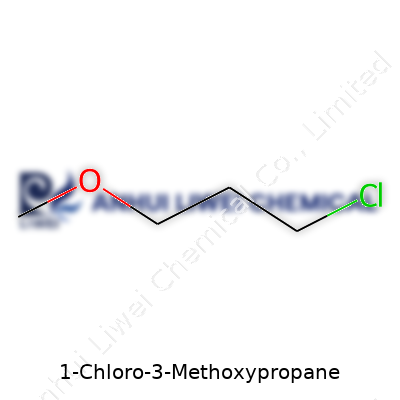
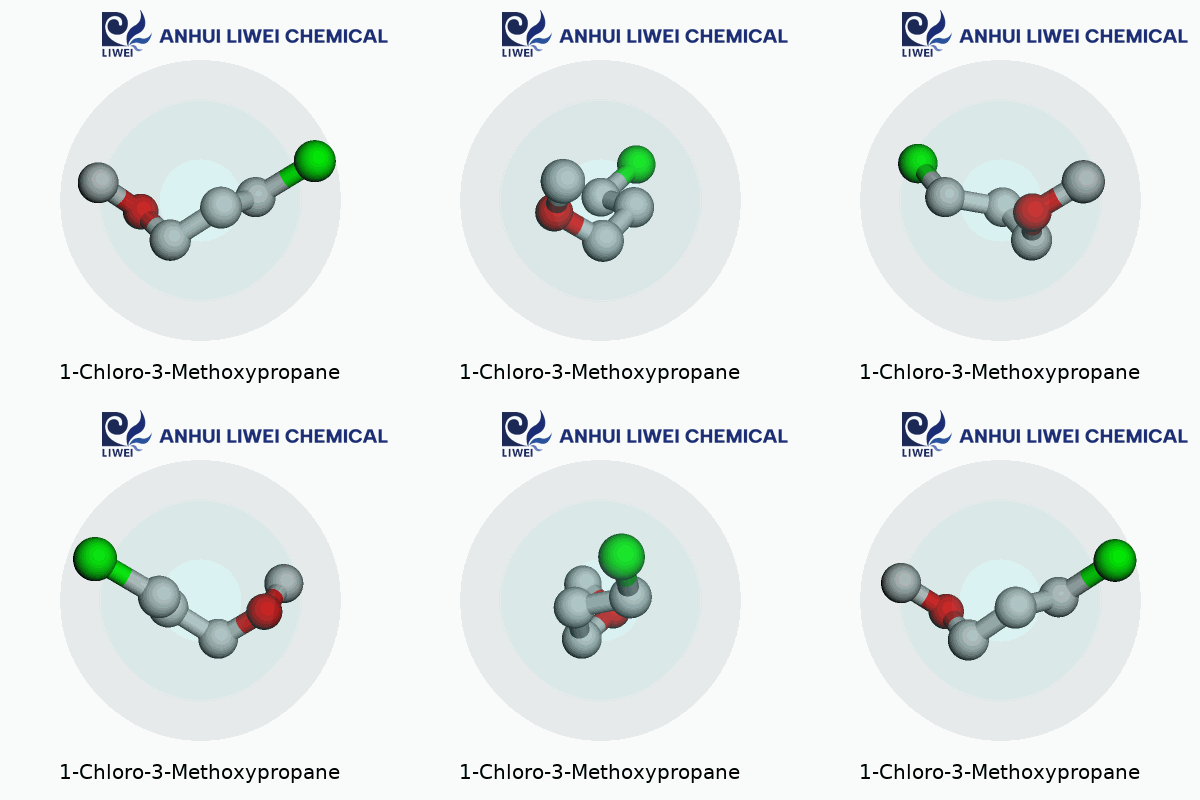
| Names | |
| Preferred IUPAC name | 1-chloro-3-methoxypropane |
| Other names |
3-Methoxypropyl chloride
3-Chloropropyl methyl ether Methyl 3-chloropropyl ether 1-Methoxy-3-chloropropane 3-Chloro-1-methoxypropane 3-Methoxy-1-chloropropane Propane, 1-chloro-3-methoxy- Ether, 3-chloropropyl methyl |
| Pronunciation | /wən.ˈklɔː.rəʊ.θriː.mə.ˈθɒk.si.ˈprəʊ.peɪn/ |
| Identifiers | |
| CAS Number | 36239-09-5 |
| 3D model (JSmol) | COCCCCl |
| Beilstein Reference | 1732158 |
| ChEBI | CHEBI:19462 |
| ChEMBL | CHEMBL3182847 |
| ChemSpider | 211059 |
| DrugBank | DB04272 |
| ECHA InfoCard | 100.048.222 |
| EC Number | 252-919-2 |
| Gmelin Reference | 1731223 |
| KEGG | C19488 |
| MeSH | 1-Chloro-3-methoxypropane |
| PubChem CID | 70229 |
| RTECS number | KQ3500000 |
| UNII | 9O9W5F9X7G |
| UN number | 1993 |
| CompTox Dashboard (EPA) | DTXSID2022269 |
| Properties | |
| Chemical formula | C4H9ClO |
| Molar mass | 108.57 g/mol |
| Appearance | Colorless liquid |
| Odor | pungent |
| Density | 1.034 g/mL |
| Solubility in water | Slightly soluble |
| log P | 1.2 |
| Vapor pressure | 10.7 mmHg ( 20 °C) |
| Basicity (pKb) | 17.5 |
| Magnetic susceptibility (χ) | -69.1±0.5 cm3/mol |
| Refractive index (nD) | 1.408 |
| Viscosity | 0.93 mPa.s at 20 °C |
| Dipole moment | 2.06 D |
| Thermochemistry | |
| Std molar entropy (S⦵298) | 384.5 J/(mol·K) |
| Std enthalpy of formation (ΔfH⦵298) | -312.5 kJ/mol |
| Std enthalpy of combustion (ΔcH⦵298) | -2717.7 kJ/mol |
| Hazards | |
| GHS labelling | GHS02, GHS07; Warning; H226, H315, H319, H335; P210, P233, P240, P241, P242, P243, P261, P264, P271, P280, P302+P352, P303+P361+P353, P304+P340, P305+P351+P338, P312, P332+P313, P337+P313, P362, P370+P378, P403+P235, P405, P501 |
| Pictograms | GHS02, GHS07 |
| Signal word | Warning |
| Precautionary statements | P210-P233-P240-P241-P242-P243-P261-P264-P271-P280-P302+P352-P303+P361+P353-P304+P340-P305+P351+P338-P312-P332+P313-P337+P313-P362+P364-P370+P378-P403+P233-P403+P235-P405-P501 |
| NFPA 704 (fire diamond) | 1-2-0 |
| Flash point | 28 °C |
| Autoignition temperature | 290 °C |
| Lethal dose or concentration | LD50: 2300 mg/kg (Rat, oral) |
| LD50 (median dose) | 3400 mg/kg (rat, oral) |
| NIOSH | TZ5075000 |
| REL (Recommended) | Not established |
| Related compounds | |
| Related compounds |
1-Bromo-3-methoxypropane
1-Iodo-3-methoxypropane 1-Chloro-3-ethoxypropane 1-Chloro-2-methoxyethane 2-Methoxyethyl chloride 1-Chloro-4-methoxybutane 4-Methoxybutyl chloride 3-Methoxypropylamine 3-Methoxy-1-propanol 1,3-Dichloropropane |


