1-Bromohexane: Unwrapping Its Past, Purpose, and Potential
Historical Development
Long before the modern lab became crowded with instruments and sensors, organic chemists experimented with basic hydrocarbons like hexane. Early exploration of alkyl bromides dates to the rise of synthetic organic chemistry in the 19th century. Chemists discovered that introducing bromine to hexane triggered specific and predictable changes, giving rise to 1-bromohexane. Through the decades, both method and purity got refined by developments in distillation and analytical chemistry. Laboratories that once relied on labor-intensive synthesis now benefit from cleaner, controlled routes. Over time, using catalysts and improved apparatus lessened impurities, showing just how far chemical manufacturing has come.
Product Overview
1-Bromohexane stands out as a primary alkyl bromide, notable for its straight hexyl chain. Produced as a colorless to pale yellow, oily liquid, this compound makes frequent appearances in organic labs as a building block for more complex molecules. It belongs to a family of alkyl halides that help stitch together many pharmaceuticals, specialty chemicals, and advanced materials. Commercial suppliers cater to different grades depending on the purity needs of the end user. Its label may feature common trade names such as hexyl bromide, n-hexyl bromide, or hexane, 1-bromo-, reflecting its widespread recognition among researchers and industrial chemists alike.
Physical & Chemical Properties
This compound has a molecular formula C6H13Br, with a molecular weight clocking in at about 165.07 g/mol. Its boiling point hovers around 155°C to 157°C, making distillation a suitable purification method. Usually, 1-bromohexane appears as a nonpolar, oily liquid, slightly denser than water and sparingly soluble in it. It dissolves well in many organic solvents such as ether and chloroform. Its refractive index lands near 1.445 at 20°C, which experienced chemists often use to check on its purity. The bromine atom on the terminal carbon gives this molecule a reactive spot for further chemical modification.
Technical Specifications & Labeling
Suppliers often sell this chemical with stated purity levels, such as 98% or higher for demanding synthesis work. Labels must indicate hazardous contents, hazard pictograms according to GHS requirements, and safe handling practices. Lot numbers, CAS registry number (111-25-1), and storage instructions usually show up on packaging. Many brands run gas chromatography tests to assure quality, with certificates showing the percentage of main compound and traces of known impurities.
Preparation Method
In the lab, synthesizing 1-bromohexane often starts with n-hexanol or 1-hexene, and swaps out a hydrogen or hydroxyl group for a bromine atom. For example, reacting n-hexanol with hydrobromic acid or phosphorus tribromide in a cold solvent turns the alcohol into the target bromoalkane. Efficient extraction depends on controlling temperature and using just the right ratio of reactants. Industrial chemists favor continuous reactor systems that raise yields and trim down by-products. The chosen method depends on the required scale and desired purity.
Chemical Reactions & Modifications
On the bench, 1-bromohexane acts as an alkylating agent, supplying a ready bromine that can get swapped by nucleophiles. Chemists count on this type of bromide for SN2 reactions, where a nucleophile displaces the bromine, giving rise to ethers, amines, or other functionalized intermediates. Its unbranched chain and reactive end make it handy for building structures in stepwise synthesis, including the making of surfactants and specialty compounds. Sometimes, it feeds into metal-catalyzed coupling reactions, broadening its uses in developing novel molecules for both research and industries.
Synonyms & Product Names
1-Bromohexane moves in chemical catalogs under several trade names and synonyms. Some circles prefer calling it n-hexyl bromide or hexane, 1-bromo-. Regulatory databases track it by its CAS registry number 111-25-1, ensuring buyers and laboratories match up with the correct substance. These synonyms smooth out communication between labs, suppliers, and regulatory groups, cutting confusion in safety data sheets and procurement orders.
Safety & Operational Standards
Handling 1-bromohexane takes good lab sense and the right equipment, not just because of its flammability but also due to its irritation effects. Direct contact with skin or inhalation of vapor can cause discomfort; wearing gloves, goggles, and using a fume hood remain important steps. SDS documentation points to its moderate acute toxicity. Storing the chemical in cool, dry, and well-ventilated conditions protects against degradation and reduces the risk of accidental exposure. Regular safety training and compliance with local chemical storage rules anchor responsible use.
Application Area
1-Bromohexane works behind the scenes in many synthesis routes, often as a reagent in making other valuable synthetic intermediates. Pharmaceutical companies use it in stepwise alkylation to assemble drug candidates. Other industries tap into its chain-extension skills, letting them build surfactants and lubricants. Researchers leverage its straightforward reactivity in mechanism studies and as a standard molecule when tweaking reaction conditions. Thanks to its clean reaction pathway, scientists keep finding creative uses in making fine chemicals, fragrances, and agrochemical agents.
Research & Development
Innovation in organic synthesis keeps raising the bar for making and using 1-bromohexane. Green chemistry researchers aim to lower the environmental load, searching for milder, solvent-free, or recyclable catalysts in preparation methods. Teams keep updating analytical methods to quickly spot any impurities, giving safer, more predictable results. Some have looked at biomimetic approaches where enzymes on modified materials help place the bromine atom with better accuracy. Open-access publications and research collaboration across continents continue to push new uses and stepwise process improvements.
Toxicity Research
Toxicologists studying 1-bromohexane watch for both acute and chronic effects. Early reports showed mild-to-moderate irritation on contact with skin or eyes, so personal protective equipment makes a real difference. Inhalation leads to similar temporary irritation, again pointing to the need for fume hoods. Animal model studies keep an eye on possible neurotoxic or reproductive risks, helping regulators decide on workplace exposure limits. Ongoing work aims to clarify the break-down path in the environment and checks for long-term accumulation in living organisms. It’s a good reminder for labs to collect and destroy waste sensibly whenever possible.
Future Prospects
The road ahead for 1-bromohexane depends on both regulatory shifts and innovation. Green chemistry principles will likely inspire new preparation methods, hoping to replace strong acids or heavy metals with renewable reagents or catalysts. Demand for high-purity intermediates in fine chemicals and pharma looks steady, but quality control and worker safety set an increasingly high bar. Digital tracking of batches, automated sampling, and remote monitoring might become the norm, reflecting bigger trends in chemical manufacturing. Research into alternative raw materials and engineered enzymes could offer both cleaner and faster routes, opening doors to friendlier manufacturing processes. As technology advances, creative reuse and upcycling of brominated by-products could find a place in the circular economy, echoing a wider push for more sustainable practices across the whole field of organic synthesis.
Understanding 1-Bromohexane's Place in the Lab
In my years spent around chemical research and lab work, 1-bromohexane never drew much attention from the outside world, but it played a solid recurring role on the workbench. If you ever stepped into an undergraduate organic chemistry lab, you probably saw a brown glass bottle quietly labeled and ready. Its role may look ordinary to outsiders, but ask anyone who’s run a synthesis before, and they’ll say it’s one of those no-nonsense building blocks.
The Value of a Versatile Alkyl Halide
1-bromohexane works as an alkylating agent. The bromo group means it’s reactive with all sorts of nucleophiles, so it gets called up in plenty of classic lab reactions. Grignard reagents, for example, might sound intimidating, but I remember my first time mixing 1-bromohexane with magnesium in dry ether—that sudden swirl and heat, a living chemistry moment. In those reactions, you end up with hexylmagnesium bromide, which lets you build more complex molecules from something that started pretty simple.
Many who work in pharmaceutical labs use 1-bromohexane to tack a straight-chain hexyl group onto their target molecules. This isn’t just for show—changing the side chain affects how the final drug behaves in the body. In this way, 1-bromohexane helps researchers test ideas and push medicines just a little closer to working the way they should.
Beyond the Lab Bench
Its uses don’t end after organic chemistry classes or academic research. 1-bromohexane shows up when companies manufacture surfactants and specialty chemicals. Adding the straight-chain group changes the solubility of a product, makes it behave differently in detergents, or helps chemists tune properties while making lubricants. This isn’t glamorous, but it keeps a lot of industrial processes running smoother.
Fine chemical companies often list 1-bromohexane as a key intermediate. Intermediates aren’t household names, but they help connect raw materials to the final compounds people do recognize. Even fragrances and flavors sometimes rely on it to get just the right molecular tweak, so its reach stretches further than people think.
Why It Matters
Some materials quietly pull their weight behind the scenes. 1-bromohexane’s chemistry is simple at first glance, but removing the “bromo” and using the chain somewhere new delivers what many modern industries demand: flexibility and control over molecular properties.
I’ve seen how tricky it gets to swap out one reagent for another in process-scale chemistry. Substituting 1-bromohexane calls for reworking steps, predicting new byproducts, and revalidating safety profiles. Sticking with what works saves time, money, and lab headaches.
Safety and Responsible Use
Every year brings new awareness about safety. Brominated compounds like this one deserve respect. Gloves, good ventilation, and prompt cleanup matter, since the material can irritate skin and pose inhalation risks. I’ve seen too many researchers shrug this off, only to deal with rashes or headaches later.
Waste handling has also become more strict as regulatory pressure grows. Factories and labs now focus on safer storage, proper labeling, and responsible disposal to protect both workers and nearby communities. It makes sense to stay updated on these requirements—a spill is the last thing anyone in a busy lab wants.
Looking Ahead
Chemistry trends point toward greener, safer reagents and less hazardous processes. 1-bromohexane’s future could include new synthesis methods from renewable sources or less toxic alternatives for similar applications. Still, for now, its practicality and predictable behavior have kept it on shelves worldwide.
This story is repeated across labs and factories, showing how simple molecules support modern science, medicine, and everyday products. If you look beyond the label on the bottle, there’s much more going on than meets the eye.
Chemistry Doesn’t Have to Be Complicated
Chemistry class brings back some memories. The scent of alcohol lamps, the quiet hum of experimentation, and the constant balancing of equations. Hexane derivatives, like 1-bromohexane, stood out because they’re simple yet anchor countless discussions in labs. Even though the product seems like just another clear liquid in a bottle, the details behind its formula carry weight in fields such as pharmaceuticals, agriculture, and manufacturing.
Breaking Down the Basics
Bromine rarely hogs the spotlight in organic chemistry lectures, but students remember 1-bromohexane. This compound features a chain of six carbons — hexane — with a single bromine atom taking its place at the chain’s very end. That gives the molecular formula C6H13Br. That’s the nuts and bolts.
This isn’t random trivia. In the field or in a job, people rely on the correct molecular formula for everything from designing a synthetic route, to evaluating reactivity, toxicity, and logistics for transport. Get the formula wrong and a researcher could spend weeks chasing an incorrect structure, which costs both time and money.
Why Accuracy in Formulas Matters
A single mistake in molecular identification sometimes leads to harmful outcomes. Stories from industry and academia tell of missed grant deadlines and wasted batches, all due to wrong chemical reporting. I once saw a scientist baffled by persistent side reactions — it turned out the starting material was misidentified due to its formula. Just a single letter off.
Chemical companies keep teams busy double-checking formulas. Not just for regulatory paperwork, but because the world now expects safer, cleaner practices. The molecular formula gives clues about volatility, toxicity, environmental persistence, and reactivity. For 1-bromohexane, regulators monitor brominated chemicals because they don’t always break down easily, and traces can linger in soil and water.
The Downstream Impact
People working in labs, from undergrads to experienced chemists, benefit from clear, reliable information. C6H13Br translates not only to raw numbers, but to a clear signal about what the chemical might do in a reaction. Hexanes serve as solvents, but swapping one hydrogen for bromine totally shifts reactivity. Bromoalkanes act as electrophiles, making them essential in carbon-carbon coupling or for introducing functional groups down the line. That’s why getting the formula right is more than a paperwork detail.
The Path Toward Fewer Mistakes
Mistakes thrive when people rush or skip verifying source data. Peer review helps. Digital lab notebooks now prompt confirmation steps for formulas and structures. Chemical suppliers have started QR coding bottles, which opens up safety data sheets and formula confirmation on a smartphone. Even the best systems need backup—open communication and ongoing education in labs cut down mishaps and keep projects on track.
The lesson? Treating the molecular formula as a living part of the research process, not just a textbook answer, means researchers can do better work. It’s still just six carbons, thirteen hydrogens, and a bromine — but its impacts run much deeper than a silent bottle on a shelf.
Understanding the Risks
1-Bromohexane gets labeled as hazardous for a reason. Breathing in its vapors can irritate lungs and eyes. Accidentally spilling it on skin or clothing brings burns and rashes. Swallowing or splashing it in the eyes causes problems that may stick around for a while. I’ve spent enough time in the lab to know that ignoring these risks leads to emergencies, even for seasoned chemists.
Personal Protective Gear Comes First
Plain nitrile gloves, a well-fitted lab coat, and chemical splash goggles form the first barrier. In my experience, lightweight gloves rip fast and let the chemical sneak through. Thick nitrile or butyl gloves hold up better. For face protection, standard glasses won't cut it. Only chemical goggles offer enough coverage, and I stick with them every time. For messy or splashing jobs, I throw on a face shield. Safety starts with habits and routines, not just rules.
Avoid the Smell—Control the Air
1-Bromohexane vapors build up indoors. I always work inside a functioning fume hood, with the sash pulled down low. Hoods remove fumes, but only if they’re kept clear of clutter inside. Propping open a window doesn’t cut it. Everyone working nearby deserves clean air, so keeping the workspace sealed off from common areas avoids surprises.
No Spills, No Drips
Pouring and moving this chemical means tracking every drop. I leave open containers for just as long as needed, and nothing more. I’ve seen how quickly a forgotten open bottle turns into a spill risk. Tight, screw-capped bottles, never glass droppers or pipettes, help prevent drips. If some gets out, better to spot the puddle fast than ignore it. I keep absorbent pads and neutralizer close by, just like I was taught in my first internship.
Hand Washing Isn’t Optional
After a lab session involving 1-Bromohexane, I head to the sink before doing anything else. Gloves come off carefully, and hands get scrubbed with soap and warm water. Contamination follows you outside the lab if you aren’t careful, touching doorknobs or phones. A quick wash is one simple step that’s saved me from bringing chemical traces anywhere near my lunch or face.
Proper Storage Prevents Accidents
Bottles of 1-Bromohexane go in a clearly labeled, ventilated cabinet—never out on a bench, and never close to acids or oxidizers. I check that the cap’s tight and bottles show no cracks or leaks. This kind of chemical won’t hold up well in bright light or near heat sources, so I stash it in a dark, cool spot. Stocking up only on what’s needed reduces storage risks.
Getting Help When Things Go Wrong
If anything spills or someone feels dizzy or starts coughing, quick steps matter most. I know where the nearest eyewash and safety shower sits, and I tell everyone new where to find them. Dialing emergency contacts without delay beats trying to handle a big mess alone. Every lab should keep emergency numbers on the wall, and everyone should know who else knows first aid.
Training is Never Finished
I review safety info sheets for any new chemical or new process, and I talk hazards over with coworkers. Forgetting to update skills or refresh old knowledge means forgetting steps when it counts most. Regular drills and discussions keep everyone on track and confident. Working around chemicals brings enough surprises already. Sticking to strict safety habits—because I’ve seen the wrong way—gets me home safe every night.
Understanding the Substance
1-Bromohexane seems like just another chemical bottle in the lab, but its properties make strict storage more than just following protocol. Its low flash point means this liquid catches fire with little provocation. The fumes bring serious health risks. Treating it as an afterthought won’t sit well with anyone who cares about safety or wants to avoid a lab evacuation.
Fire and Health Hazards Are Real
Think back to times you’ve worked with volatile solvents or alkyl halides. One moment of carelessness—maybe forgetting to tighten a cap or storing near heat sources—often spells trouble. 1-Bromohexane fits right into that high-risk category. Its vapor travels quickly; in a busy work environment, a bit escaping can surprise everyone with its intensity, irritating eyes and lungs faster than most people realize.
If you look at data from the National Fire Protection Association, chemicals with low flash points and high volatility account for a big share of workplace accidents that could’ve been prevented with better storage. The CDC and MSDS reinforce this: storing such materials cool and ventilated saves both health and property.
Not All Storage Spaces Are Equal
Every chemist has found flammable liquids in spots they shouldn’t be: tucked above eye level, balanced on crowded shelves, or left beside direct sunlight. 1-Bromohexane, with its flammability and sensitivity to light, should always sit in a flammable storage cabinet, away from heat and flames. Shelves near windows or heaters introduce risk. Normal glass bottles without proper seals let vapors leak, which harms both air quality and health over time.
Many ignore the importance of labeling, yet confusion leads to accidental mixing. If 1-Bromohexane mingles with incompatible chemicals, especially strong reducing agents, the mix can turn dangerous. In my early lab years, a poorly marked bottle led to one messy cleanup—corrosive gas, ruined clothing, and a bitter lesson: poor labeling can hurt more than a spreadsheet.
Improving Safety with Daily Habits
Good habits make all the difference. Always double-check cap tightness. Keep the storage area uncluttered. Anyone working nearby appreciates ventilated spaces, so chemical storage should never be in a closed, unventilated closet or drawer. Acid cabinets look similar, but they serve a different job. For 1-Bromohexane, the bright yellow of a flammables cabinet stands as the only safe home.
Many labs wait until inspection time to fix poor storage. Consistent safety checks help spot issues before they grow. Check for leaks, make sure absorbent materials sit close to spill-prone shelves, and replace old or cracked containers as soon as possible. These small steps, grounded in experience, help keep everyone safe.
Knowledge Protects People
Simple training goes a long way. Sharing practical tips, talking through near-misses, and walking newcomers around the storage setup builds stronger workplace habits. A well-marked, ventilated, and checked flammables cabinet protects more than chemicals—it supports everyone’s peace of mind. The difference between a close call and a disaster often lies in choices made long before anything goes wrong.
Cutting Through the Basics
Plenty of people don’t give much thought to chemicals like 1-bromohexane, yet they pop up in labs, factories, and many chemistry sets. The boiling point of 1-bromohexane lands around 155°C (311°F), according to research published in the CRC Handbook of Chemistry and Physics. This number might look like a random stat from a data table, but it changes how chemists and engineers handle this compound every day.
Why This Temperature Holds Weight
Anyone who has ever worked with solvents or organic halides knows temperature predictions need to be on point. I’ve watched more than one rookie try to distill complex mixtures, only to realize later they’d cranked up the heat too much for a sensitive compound. With 1-bromohexane, you want to keep those numbers in your mind — too low won’t get the job done, too high and you start breaking down your solvent or wasting energy. That’s what boils down to dollars and safety on the line in the lab or plant.
For industrial use, this boiling point tells you exactly when vapor will start to climb from your flask. Professionals use 1-bromohexane in organic synthesis, especially when creating intermediates for pharmaceuticals, dyes, and specialty chemicals. A boiling point set at 155°C means you can separate it from impurities with higher or lower boiling points, helping you get pure product for the next stage of synthesis.
Safety and Environmental Impact
This number isn’t just a mechanical checkpoint. Handling a liquid like 1-bromohexane means dealing with a substance that pushes up into the air at classical oven temperatures. When I worked in a teaching lab, we always made sure the hood was on and students didn’t heat everything blindly. Health and safety data from the Chemical Safety Facts point out that inhaling bromoalkanes can harm your health. When it starts to vaporize, the risk of breathing in harmful fumes increases. Consistent ventilation, careful temperature control, and proper personal protective equipment safeguard workers from unnecessary exposure.
As part of environmental care, controlling emission during distillation can keep brominated compounds out of the air and water. The European Chemicals Agency lists these as possible hazards for aquatic systems, highlighting the need for scrubbing equipment and containment solutions in industrial-scale settings. Taking the boiling point into account means designing better capture systems and limiting accidental releases.
Room for Better Process and Practice
Students and experienced engineers both benefit from knowing these temperature limits. I’ve seen clever chemists tune distillation columns or vacuum pressure to drop the necessary boiling point, saving energy while reducing risk. These improvements can mean lower bills and a smaller carbon footprint for manufacturers. They can also simplify compliance with regulatory standards from agencies like OSHA and the EPA.
The right data unlocks smart choices in chemical handling. Paying attention to information like the boiling point lets folks shape lab work and industrial runs that meet both productivity and safety goals. In my experience, small changes — like logging real-time temperatures or upgrading to digital monitoring — have kept sensitive processes on track and prevented plenty of headaches down the road.
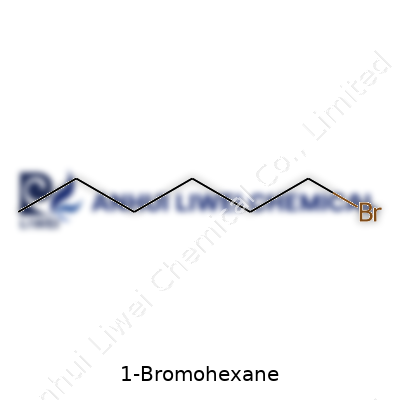
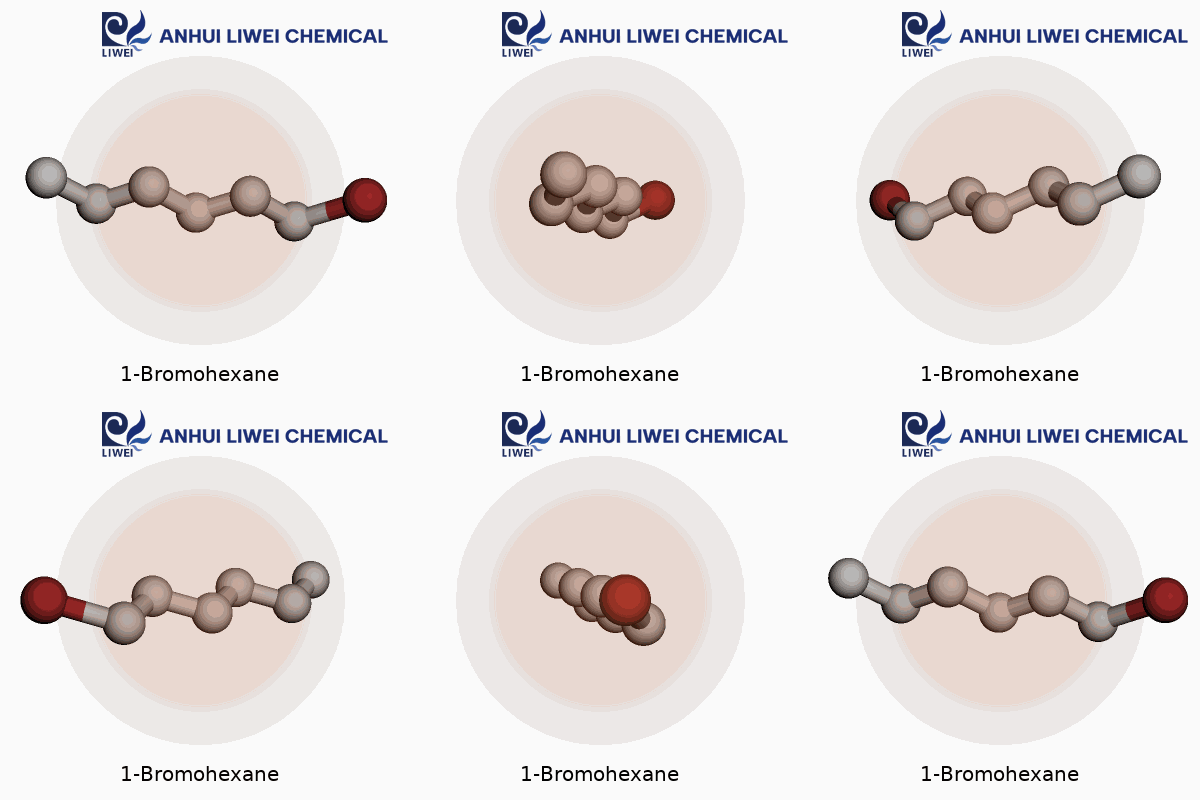
| Names | |
| Preferred IUPAC name | 1-bromohexane |
| Other names |
1-Bromohexane
Hexyl bromide n-Hexyl bromide 1-Hexyl bromide Bromohexane Hexane, 1-bromo- |
| Pronunciation | /wʌn.brəʊ.məʊˈhɛk.seɪn/ |
| Identifiers | |
| CAS Number | 111-25-1 |
| 3D model (JSmol) | CCCCCCBr |
| Beilstein Reference | 1731166 |
| ChEBI | CHEBI:43596 |
| ChEMBL | CHEMBL1234315 |
| ChemSpider | 11225 |
| DrugBank | No DrugBank entry found for 1-Bromohexane. |
| ECHA InfoCard | 100.003.850 |
| EC Number | 203-850-2 |
| KEGG | C19337 |
| MeSH | 1-Bromohexane |
| PubChem CID | 7902 |
| RTECS number | MO0925000 |
| UNII | 4H62Q8H9X6 |
| UN number | UN1993 |
| Properties | |
| Chemical formula | C6H13Br |
| Molar mass | 165.07 |
| Appearance | Colorless liquid. |
| Odor | pungent |
| Density | 1.176 g/mL |
| Solubility in water | Insoluble |
| log P | 3.80 |
| Vapor pressure | 5.2 mmHg at 25°C |
| Acidity (pKa) | 40.0 |
| Magnetic susceptibility (χ) | `-98.6 x 10^-6 cm^3/mol` |
| Refractive index (nD) | 1.4478 |
| Viscosity | 1.03 mPa·s (at 20 °C) |
| Dipole moment | 2.0 D |
| Thermochemistry | |
| Std molar entropy (S⦵298) | 328.6 J·mol⁻¹·K⁻¹ |
| Std enthalpy of formation (ΔfH⦵298) | -194.1 kJ/mol |
| Std enthalpy of combustion (ΔcH⦵298) | -4005.6 |
| Pharmacology | |
| ATC code | No ATC code |
| Hazards | |
| GHS labelling | GHS02, GHS07, Warning, H226, H315, H319, H335, P210, P233, P240, P241, P242, P243, P261, P264, P271, P280, P303+P361+P353, P304+P340, P305+P351+P338, P332+P313, P337+P313, P362, P370+P378, P403+P233, P405, P501 |
| Pictograms | GHS02, GHS07 |
| Signal word | Danger |
| Precautionary statements | P210 P233 P240 P241 P242 P243 P261 P264 P271 P280 P303+P361+P353 P304+P340 P305+P351+P338 P337+P313 P370+P378 P403+P235 P405 P501 |
| NFPA 704 (fire diamond) | 2-2-0 |
| Flash point | 57 °C |
| Autoignition temperature | 240°C |
| Lethal dose or concentration | LD50 (oral, rat): 1000 mg/kg |
| LD50 (median dose) | 1000 mg/kg |
| NIOSH | MO5160000 |
| PEL (Permissible) | Not established |
| IDLH (Immediate danger) | Not established |
| Related compounds | |
| Related compounds |
1-Bromopentane
1-Bromoheptane 1-Chlorohexane 1-Iodohexane 2-Bromohexane 1,6-Dibromohexane Bromocyclohexane |


